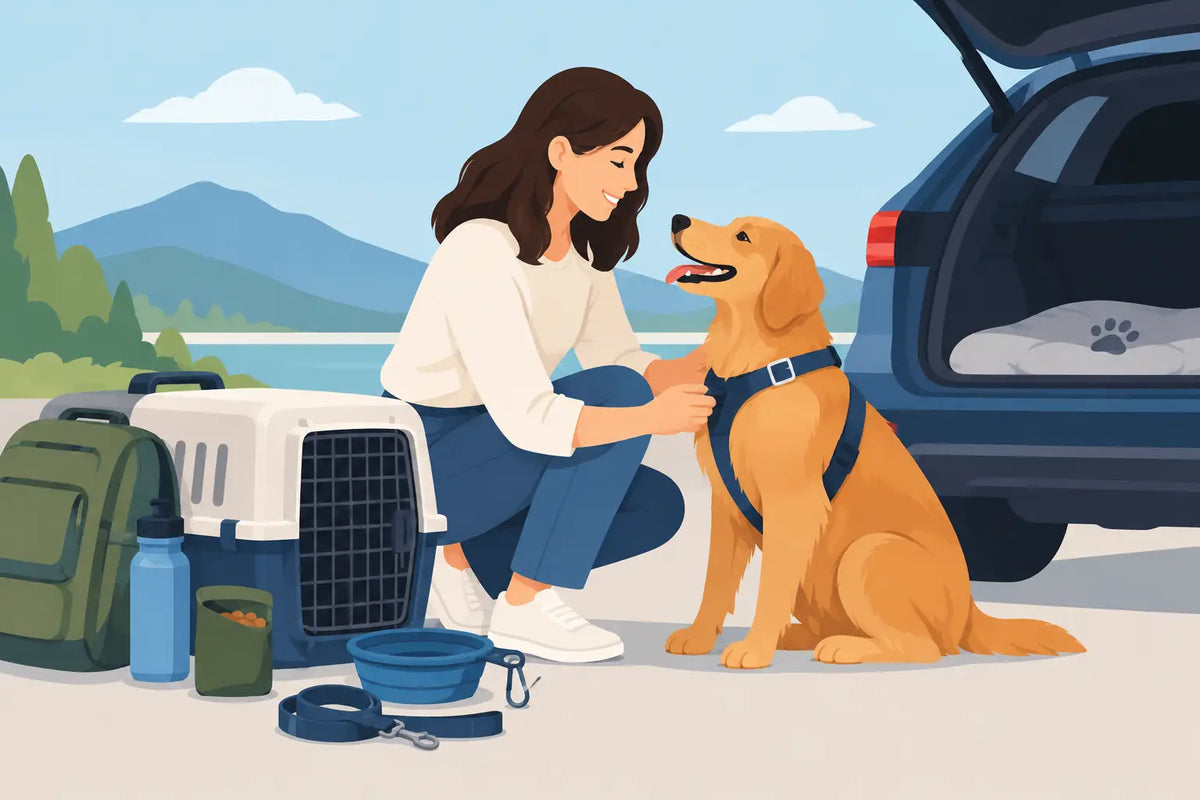
A road trip can begin with tail thumps against the back seat or the storm-shakes before you have even backed out of the driveway. The difference is rarely luck. When you know how to prepare your dog for travel, you give them time to understand the new routine, feel safe in their space, and arrive ready for the good part: more walks, more smells, more time with their favorite people.
Travel asks a lot of dogs. Their usual nap spot disappears, meals happen at odd hours, and every rest stop comes with a new chorus of scents. A little preparation can turn that upheaval into an adventure your pup can handle with a healthy dose of happy.
How to Prepare Your Dog for Travel Before Departure
Start planning at least two to four weeks before a longer trip. If your dog gets nervous in the car, needs medication, has mobility concerns, or is flying, give yourself more time. The goal is not to make them love every part of travel overnight. It is to make each piece familiar enough that it does not feel like a surprise.
First, make sure their ID tag is current with your cell number. If your dog is microchipped, confirm that the registration information is accurate. Bring a recent photo of your dog on your phone, too. It is one of those boring little details that feels very good to have if you ever need it.
Schedule a vet visit when it makes sense for your destination or your dog’s health. Some airlines, lodging properties, and states require a current health certificate or proof of rabies vaccination. Your vet can also help assess whether travel is appropriate for a senior dog, a dog with a chronic condition, or a pup who gets carsick. Do not try a new prescription, calming product, or diet for the first time on travel day. Your dog deserves a trial run at home, where the stakes are lower and the bathroom breaks are easier.
Practice the travel setup in small doses
A carrier, crate, car harness, or seat cover should not make its first appearance when everyone is rushing to leave. Set it up in the living room with a familiar blanket and a few treats. Let your dog investigate at their own pace. Feed a meal nearby, then inside the carrier or crate if that is where they will ride.
For car travel, begin with a few calm minutes sitting in the parked vehicle. Then drive around the block, followed by a short ride to somewhere pleasant, such as a quiet trail or a friend’s house. A drive that only ends at the vet can make even a cheerful dog suspicious of the car keys.
If your dog will fly, confirm the airline’s current pet rules well ahead of time. Carrier dimensions, breed restrictions, temperature policies, and health-document requirements can vary. For most dogs, flying in the cabin is less stressful than cargo, but it depends on their size, temperament, and the route. Always use an airline-approved carrier that allows your dog to stand, turn around, and lie down comfortably.
Build a Calm Travel Routine
Dogs read our routines like a favorite book. Keep as much of the familiar as you can: their usual food, feeding times, leash, bedtime item, and potty cue. A new city will still be new, but familiar rhythms give your dog something steady to hold onto.
Feed a light meal several hours before a car ride if your dog is prone to nausea. Avoid a huge breakfast right before departure, especially before a long drive. Water matters, though. Offer small, regular drinks and plan breaks every two to three hours for most adult dogs. Puppies, seniors, and dogs with health needs may need more frequent stops.
Exercise is helpful, but do not turn it into a pre-trip boot camp. A relaxed walk with time to sniff can take the edge off without leaving your dog overheated or exhausted. Save high-intensity fetch for after you arrive and your pup has had time to settle.
For dogs who experience the storm-shakes around travel, focus on steady support rather than a last-minute knockout. A predictable pre-departure routine, a familiar chew or enrichment toy, and calm handling can all help. If daily wellness support is part of your routine, Hemp Hounds Calm chews are made with THC-free hemp, lavender, valerian root, and chamomile, without melatonin or sedatives. Like any supplement, begin it before the trip rather than expecting a brand-new routine to solve travel nerves at the gas station.
Pack for Your Dog, Not Just Your Destination
Your dog’s bag should be as practical as yours. Pack enough of their usual food for the entire trip, plus a little extra in case of delays. Sudden food swaps can cause stomach trouble that nobody wants to manage in a hotel lobby.
Bring their regular treats, a collapsible bowl, bottled water if your dog is sensitive to changes in water, poop bags, a leash, harness, waste bags, towels, grooming wipes, medications, and a pet first-aid kit. Include veterinary records and any required health paperwork in a waterproof pouch.
Comfort items earn their luggage space. A blanket that smells like home, a favorite toy, or their usual bed can make an unfamiliar room feel less strange. If your dog is a senior or gets stiff after long periods of sitting, add supportive bedding and plan shorter stretches of travel. The zoomies never retire, but older joints may need a little more kindness between exits.
Do not leave your dog alone in a parked car, even for a quick errand. Interior temperatures can become dangerous with startling speed, and a cracked window does not fix the problem. Plan fuel stops, meals, and attractions around dog-friendly options whenever possible.
Keep Car Rides Safe and Comfortable
The safest place for a dog in a moving vehicle is secured, not loose in the front seat or riding on a driver’s lap. A crash-tested harness attached correctly to the seat belt can work well for many dogs. A secured crate is another solid choice, particularly for dogs that settle better in an enclosed space.
Keep the car cool, quiet, and well ventilated. A lightly draped cover over part of a crate may reduce visual stimulation for some dogs, but airflow must stay clear and your dog should never be fully covered in a warm vehicle. Music can be fine if it is actually calming. Your favorite highway sing-along may not be their idea of peace.
Watch for signs of motion sickness or anxiety: drooling, repeated lip licking, whining, pacing, vomiting, trembling, or refusing treats. If those behaviors persist despite gradual practice, talk with your vet before the trip. There is no prize for pushing through a ride that leaves your dog miserable.
Help Your Dog Settle at the Destination
When you arrive, skip the grand tour. Take your dog directly outside for a calm potty break, then bring them into one small area with their bed, water, and familiar items. Give them time to sniff and decompress before introducing every room, every relative, or every dog at the family reunion.
Check the space from dog level. Look for open doors, loose screens, accessible trash, cleaning supplies, balconies, and escape routes. In a hotel, place the Do Not Disturb sign on the door when your dog is inside, and let staff know there is a pet in the room if the property requests it.
Keep the first evening quiet. A short decompression walk, dinner at their normal time, and a familiar bedtime routine will do more for their comfort than an action-packed arrival. Some dogs settle immediately. Others need a day or two before they eat normally, sleep deeply, or show their usual playful personality.
Travel does not have to be perfect to be good. Give your dog a safe setup, predictable pauses, and permission to take the trip at their own pace. The best travel companion is not the dog who never needs a break. It is the dog who knows their person is paying attention.