Table of Contents
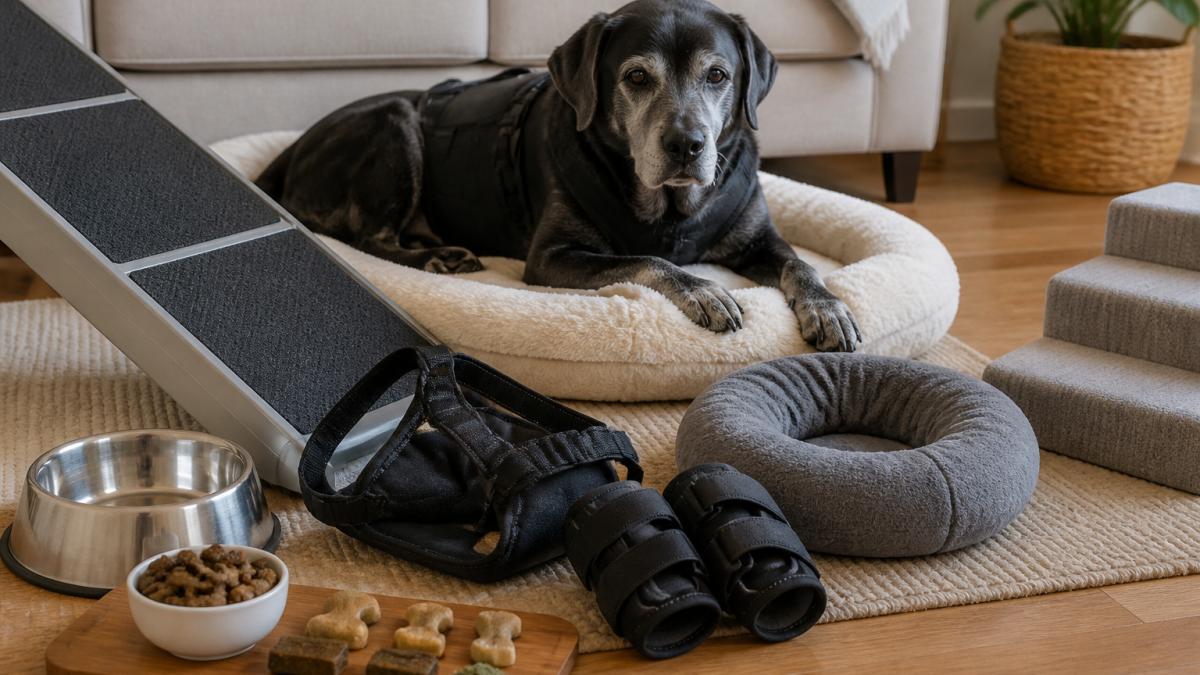
- Signs of Arthritis in Senior Dogs and When to Consider Mobility Aids
- Choosing the Right Senior Dog Mobility Aids for Your Dog's Needs
- How to Make a Home Senior Dog Friendly
- Dog Mobility Supplements: What to Look For and What to Avoid
- The Behavioral Adjustment Period: Helping Your Dog Adapt to New Gear
- Maintenance and Hygiene of Senior Dog Mobility Aids
- Conclusion
- Frequently Asked Questions
Last Updated: October 3, 2026
Signs of Arthritis in Senior Dogs and When to Consider Mobility Aids
Senior dog mobility aids become worth considering the moment your dog starts hiding early signs of joint pain. According to the American Veterinary Medical Association's pet owner resources, osteoarthritis affects a large share of older dogs, yet many cases go unnoticed for months because dogs instinctively mask discomfort. Owners often assume slowing down is just age, when it is often joint stiffness that responds well to early support. Catching the signs early changes everything about your dog's comfort and independence.
Early Warning Signs Most Owners Miss
A slow walk is the obvious sign. The subtle ones matter more.
Osteoarthritis is the progressive breakdown of cartilage that cushions the joints, leading to pain and reduced range of motion. In senior dogs, it most often shows up in the hips, knees, and spine.
A common mistake is waiting for a limp before acting. Limping means the problem is already advanced.
Choosing the Right Senior Dog Mobility Aids for Your Dog's Needs
The right senior dog mobility aids depend on which part of your dog's body needs help, how much weight it can still bear, and what your veterinarian's pain management plan allows. A rear-leg issue calls for a different tool than general weakness or slipping on floors. Before buying anything, get a veterinary consultation. A vet can assess gait, weight distribution, and whether pain management should come first, because a dog in uncontrolled pain will often reject gear that would otherwise help.
Match the Aid to the Diagnosis, Not Just the Symptom
Most guides sort aids by body part. A more useful sort is by condition, because the same limp can come from very different problems:
- Osteoarthritis of the hips or knees: A support sling or belly harness for stairs and car transfers, plus traction control indoors. These dogs can usually still bear weight, so full carts are rarely the first step.
- Degenerative myelopathy: This is a progressive spinal cord condition, not a joint problem, so pain management alone will not address it. Rear-support harnesses and, as the disease advances, a rear-wheel cart become the primary tools. Front-leg strength is the limiting factor for how long a cart stays useful.
- Intervertebral disc disease (IVDD): Often managed with strict rest and veterinary care first. A sling for controlled bathroom trips is common during recovery; a cart is typically considered only after a veterinary assessment of spinal stability.
- Post-surgical recovery: Short-term slings and lift harnesses protect the repair. These are temporary tools, not permanent solutions, and your surgeon's restrictions on range of motion should dictate the design.
Lift Harnesses and Support Slings
A lift harness wraps under the belly or hindquarters and lets you take weight off painful joints during walks or stairs. Support slings work well for short-term help, like post-surgery recovery. Look for padded straps, adjustable fit, and a handle that lets you lift without straining your own back.
What most guides miss: fit matters more than brand. A harness that slides or pinches will make your dog resist it entirely. Measure girth and length, then check the return policy before committing. Two practical checks before you buy:
- Handle placement. A handle set too far forward pulls your dog off balance. It should sit over the point where you actually need to take weight.
- Weight rating. Most slings are rated for partial support only. If you need to lift most of your dog's rear end, you need a harness designed for that, not a walking sling.
Wheelchairs, Ramps, and Traction Booties
A canine mobility cart supports dogs who have lost rear-leg function but still have strength up front. Ramps replace stairs for dogs who can still walk but struggle with incline.
| Aid | Best For | Watch Out For |
|---|---|---|
| Lift harness | Hind leg weakness, stairs | Poor fit causes chafing |
| Support sling | Post-surgery recovery | Not for full weight support |
| Mobility cart | Lost rear-leg function | Needs front-leg strength |
| Ramp | Stairs, car access | Steep incline defeats purpose |
| Traction booties | Slippery floors | Dogs need time to adjust |
Two details the table cannot capture. First, ramp angle matters more than ramp length: a ramp that is too steep is functionally a wall, and most dogs will refuse it. Second, cart sizing is not a one-time purchase.
Sequence the Purchase Around Pain Management
This is the step competitors skip. Mobility aids do not replace pain control, they extend what pain control makes possible. A common pattern is to start with a veterinary assessment and a pain management plan, then add gear that supports the specific movements your dog still wants to do. If your dog is on a joint supplement or prescription medication, the aid should make those interventions more effective, not mask a problem that needs medical attention.
How to Make a Home Senior Dog Friendly
A senior-friendly home removes the daily obstacles that strain joints. The goal is fewer stairs, better traction, and lower jumps. Small changes make a big difference for a dog with chronic pain, but the order you make them in matters, because the highest-traffic path in your home is where most slips and refusals happen.
Start With Traction, Because Everything Else Depends on It
Flooring comes first. Add non-slip surfaces, runners, or mats along the paths your dog uses most. Hardwood and tile offer no traction control, and a slip can undo weeks of progress. A dog that is afraid of slipping will start refusing to walk on those surfaces entirely, which accelerates muscle loss.
Practical specifics:
- Runners, not area rugs. A rug that slides is worse than bare floor. Look for a non-slip backing or a rug pad.
- Cover the turns. Dogs slip most often when changing direction, so place mats at corners and doorways, not just along straight runs.
- Check the stairs. Carpeted stairs help, but a dog with weak hind legs may still need a ramp or a sling-assisted descent.
Then Address Height and Jumping
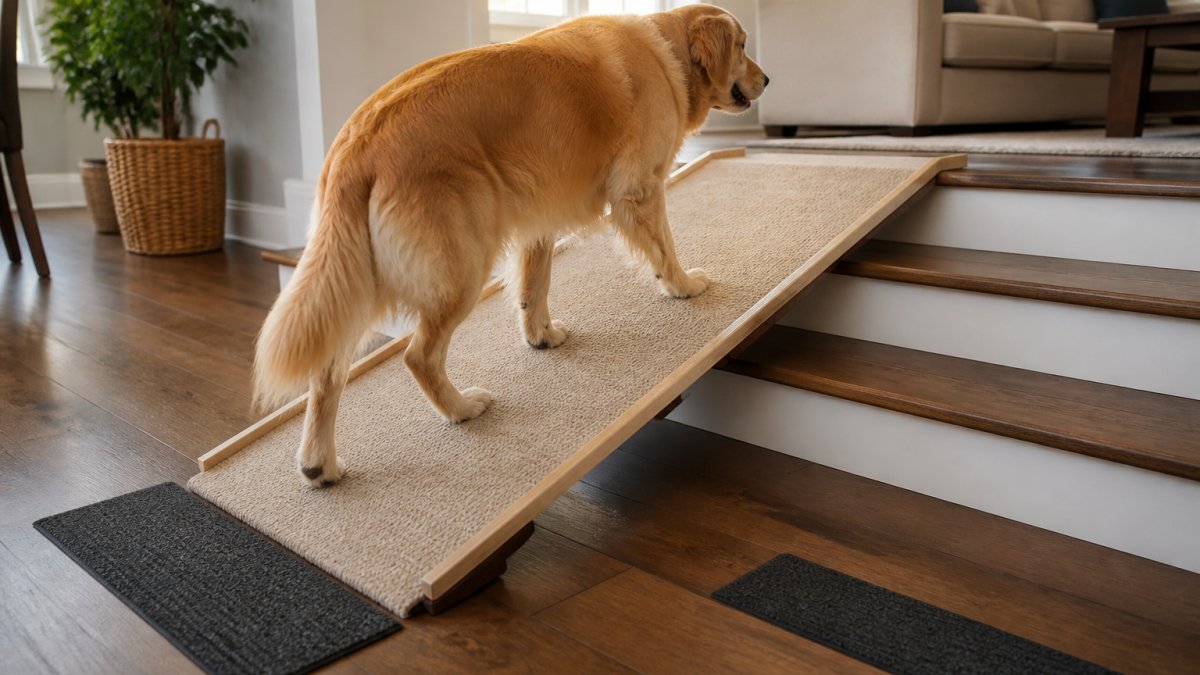
Ramps or steps for the couch and bed reduce jumping. The key variable is incline: a ramp that is too steep will be refused, so favor a longer, shallower ramp over a short, steep one.
Raise food and water bowls so your dog does not strain the neck and shoulders. An orthopedic dog bed with pressure relief helps joints recover overnight.
Prioritize by Your Dog's Daily Route
Instead of changing everything at once, walk your dog's normal day and fix the obstacles in order of how often they are hit:
- The route to the door for bathroom trips, usually the highest-frequency path.
- The sleeping spot, where your dog spends the most hours.
- The feeding station, a daily strain point for the neck and shoulders.
- The couch or bed, the highest jump in the house.
- The car, the hardest transfer, and the one most likely to require a ramp or a lift harness.
- Add non-slip mats to slippery floors
- Place ramps over stairs and at the car
- Raise food and water bowls
- Swap in an orthopedic bed with pressure relief
- Keep favorite resting spots on one level
Dog Mobility Supplements: What to Look For and What to Avoid
Dog mobility supplements can support joint comfort, but the label matters more than the marketing. Our adaptogenic chews are made in the USA with raw-state hemp, plant-based stem cells, and natural herbs, and they are free from melatonin, THC, and fillers.
What to look for:
- Bioavailable ingredients your dog can actually absorb
- Clear sourcing and manufacturing standards
- No THC, no melatonin, no heavy sedatives
What to avoid:
- Vague "proprietary blend" labels
- Formulas that rely on sedation rather than steady calm
- Products with no veterinarian support behind them
Many owners ask how long results take. Adaptogenic formulas tend to work gradually, supporting steady comfort rather than a quick knockout. A veterinary consultation can help you combine supplements with a broader arthritis management plan.
The Behavioral Adjustment Period: Helping Your Dog Adapt to New Gear
Most dogs resist new mobility gear at first, and that is normal. The behavioral adjustment period is the part competitors skip, and it is where owners give up too soon.
Introduce gear slowly. Let your dog sniff and wear the harness for a few minutes indoors before any walk. Pair it with treats and praise.
The thing nobody tells you about mobility carts: the first fitting is awkward for everyone. Expect a wobbly start.
Maintenance and Hygiene of Senior Dog Mobility Aids
Mobility gear that is dirty, worn, or poorly fitted causes more harm than good. Hygiene keeps your dog comfortable and protects sensitive skin.
Wash fabric harnesses and slings regularly, following the manufacturer's instructions. Check straps for fraying and padding for flattening. Wipe down cart frames and wheels, and inspect tires for wear.
- Wash soft gear on a regular schedule
- Inspect straps and padding for wear
- Clean cart wheels and check for loose parts
- Dry booties fully after wet use
- Refit gear as your dog's weight and strength change
For dogs with sensitive skin, a clean, well-fitted harness prevents the rubbing that triggers flare-ups.
Conclusion
Caring for a senior dog with reduced mobility asks a lot of you, and the learning curve is real. The right combination of supportive gear, a senior-friendly home, and gentle, veterinarian-supported supplements can keep your dog comfortable and active far longer than most owners expect. At Hemp Hounds, our adaptogenic chews support joint mobility and steady, non-sedating calm, with no THC, no melatonin, and no fillers, all handcrafted in the USA with beef liver flavor dogs actually enjoy.
Frequently Asked Questions
How do I know if my senior dog needs a mobility aid?
Watch for slowing on stairs, hesitation to jump on furniture, stiff legs after rest, or dragging paws. If your dog struggles to rise from lying down or avoids walks they once loved, a lift harness or ramp can help. A veterinary consultation confirms whether the issue is arthritis, hip dysplasia, or another condition. Early intervention with senior dog mobility aids often prevents muscle loss and keeps your dog active longer.
Is a ramp or stairs better for senior dogs?
Ramps are gentler on joints because they avoid the repetitive impact of stepping up and down. Dogs with hind leg weakness or degenerative myelopathy do better with a gradual ramp incline. Stairs work for mild stiffness if they have non-slip surfaces and low steps. Whichever you choose, place it where your dog already goes, like the couch or car, so they learn to use it without stress.
What should I look for in dog mobility supplements?
Prioritize ingredients with research behind them: glucosamine, chondroitin, omega-3s, and adaptogenic herbs. Avoid fillers, melatonin, and THC, which can sedate rather than support. A veterinarian-supported formula made in the USA with bioavailable ingredients gives you a clearer picture of what your dog absorbs. Give supplements at least four to six weeks before judging results, and pair them with mobility aids for the best outcome.
How do I keep mobility gear clean and safe for my dog?
Wash harnesses and slings weekly with pet-safe soap and warm water, then air dry completely to prevent skin irritation. Wipe wheelchair frames and wheels after outdoor use, and check screws monthly. Replace worn straps or cracked wheels immediately. Clean traction booties after every walk to remove debris. Proper maintenance extends gear life and protects your dog from sores or infections.