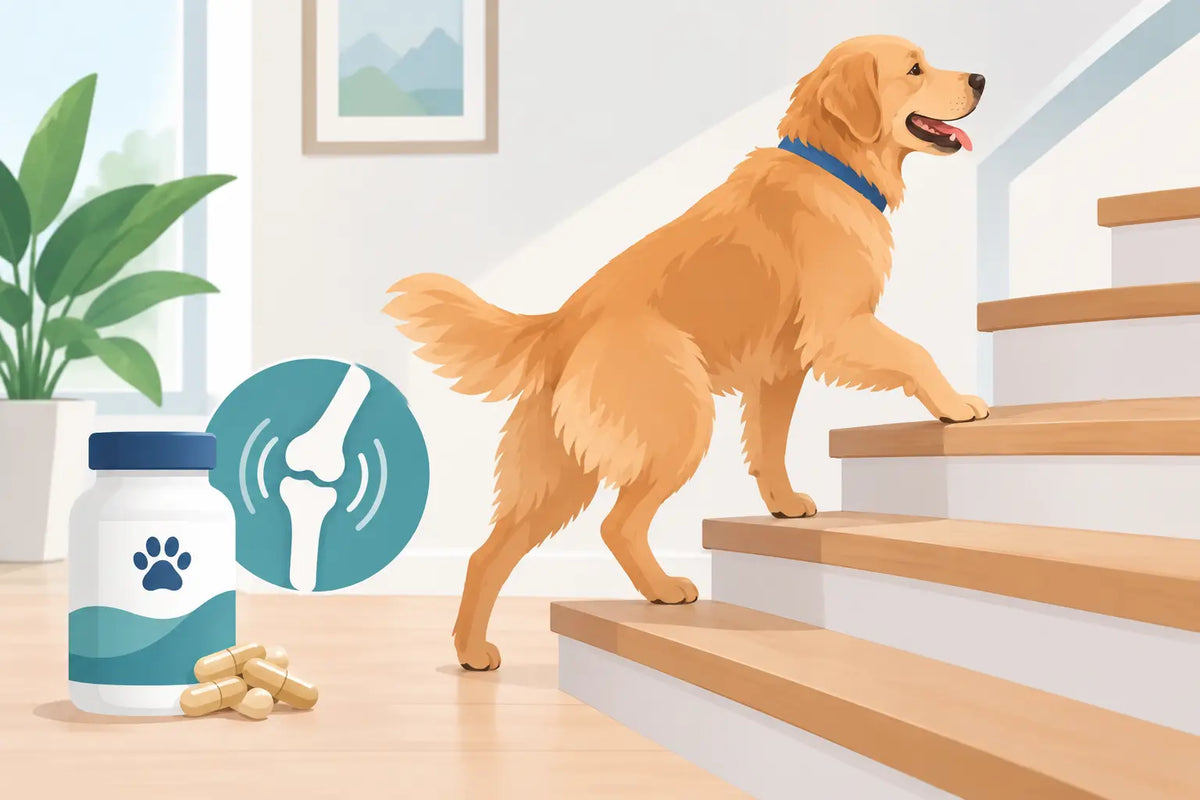
That tiny pause at the bottom step can tug at a dog parent's heart. Maybe your once-springy Labrador now takes the stairs one slow paw at a time, or your little senior pup looks up at the couch like it has suddenly become a mountain. Dog joint supplements for stairs can be a thoughtful part of a mobility routine, but they are not a magic shortcut - and a new reluctance to climb deserves attention.
The goal is not to turn back the clock or push a dog through discomfort. It is to help support the comfortable, confident movement behind the moments that make up a good dog life: greeting you upstairs, trotting out for a walk, and following the scent of dinner into the kitchen.
Why stairs are a mobility clue
Stairs ask more of a dog's body than a flat stroll. Going up requires strength and range of motion in the hips, knees, and back legs. Going down calls for controlled balance and puts additional force through the front limbs. A dog may handle a neighborhood walk just fine while still finding a flight of stairs challenging.
That does not automatically mean arthritis. A slipped paw, long nails, weak muscles after a quiet winter, a back issue, an old injury, or a new pain can all change how a dog uses the steps. Small dogs may struggle with steep risers; big dogs may find narrow, slick stairs awkward. Puppies and athletic adult dogs can have mobility concerns, too.
Pay attention to patterns. Is the hesitation worse first thing in the morning? Does your dog go up but resist coming down? Are they bunny-hopping, favoring a leg, lagging behind, or stopping at the landing? Those everyday details are useful information for your veterinarian.
When to call the vet before trying a supplement
A daily chew can support joint wellness, but it should not cover up sudden or severe pain. Book a veterinary visit promptly if your dog yelps, cannot bear weight, drags a paw, falls, has swelling, suddenly refuses stairs, or seems painful when touched. Changes in appetite, bathroom habits, energy, or coordination also deserve a call.
For gradual stiffness, an exam is still a smart first move. Your vet can help identify whether joints are the likely issue, assess weight and muscle condition, review medications, and recommend a plan that fits your dog's age and health history. This matters especially for dogs with liver disease, kidney disease, bleeding concerns, allergies, or medications that may interact with particular ingredients.
Think of supplements as a supportive teammate, not a substitute for diagnosis, prescribed pain relief, rehabilitation, or a home setup that keeps your pup safer.
What to look for in dog joint supplements for stairs
The most useful formula is one your dog will actually take consistently. Mobility support tends to be a daily habit, not a one-and-done treat after a hard hike. Look for clear dosing based on your dog's weight, a straightforward ingredient panel, and a texture your dog accepts without a kitchen negotiation.
A few ingredients show up often in quality mobility formulas:
- Glucosamine is commonly used to support cartilage and normal joint function. It is a familiar foundational ingredient, though individual responses vary.
- New Zealand green-lipped mussel naturally contains omega-3 fatty acids and other compounds used in joint-support formulas. It can be a welcome whole-food-style option, but dogs with shellfish sensitivities need veterinary guidance.
- Turmeric is valued for its antioxidant properties and is often included to support a healthy inflammatory response. The dose and the full formula matter, since turmeric is not right for every dog.
- Omega-3 fatty acids can support joint comfort as well as skin and coat health. A veterinarian can help you choose an appropriate amount, particularly if your dog already receives fish oil.
Hemp Hounds' Hip & Joint soft chews pair THC-free hemp with glucosamine, turmeric, and New Zealand green-lipped mussel in a soft, beef-liver-flavored daily chew. The formula is made without melatonin or sedatives because mobility support should help your dog enjoy their day, not turn their personality down.
Set realistic expectations for a daily chew
A supplement is not likely to make a painful staircase comfortable overnight. Some pet parents notice small changes in willingness to move over several weeks, while others see little difference. A fair trial usually means giving the recommended daily amount consistently for at least 10 to 14 days, then continuing to monitor with your veterinarian's guidance. For joint-focused ingredients, a longer trial may be recommended.
Watch for practical wins rather than expecting puppy-level zoomies. Your dog may rise from their bed with less hesitation, take a few more confident steps, or choose to come upstairs again. Keep a simple note on your phone: stair behavior, walk length, morning stiffness, appetite, stool changes, and energy. It is easier to spot a gradual shift when you are not relying on memory after a busy week.
If there is no change, do not simply double the dose or stack several joint products. More is not always better. Your vet can help you decide whether to adjust the routine, try another option, investigate another cause, or add therapies such as weight management, physical rehabilitation, or prescription treatment.
Make the staircase kinder on joints
Even the best dog joint supplement cannot fix slippery floors or a staircase that feels like a ski slope. Small changes around the house can reduce the daily strain that makes a dog think twice about climbing.
Start with traction. Secure carpet treads or a runner to every step, and make sure the edges cannot curl up. Keep steps clear of shoes, toys, and laundry baskets. Good lighting helps older dogs see the stair edge, while a gate prevents unsupervised trips when you cannot be nearby.
For dogs who are unsteady, use a well-fitted support harness and move at their pace. Avoid pulling them by the collar or rushing them up the stairs. If your dog is struggling, it may be kinder to create a comfortable main-floor setup with water, a bed, and family time close by. A ramp can be useful for short furniture climbs, but it needs a gentle incline and nonslip surface to be safer than the steps it replaces.
Body condition matters, too. Extra weight adds load to every joint and every stair. A vet-approved nutrition plan, low-impact movement, and regular nail trims can make a meaningful difference. For many dogs, short, steady walks and controlled strengthening exercises are more helpful than one heroic weekend hike.
How to start a mobility routine without the fuss
Choose a calm, repeatable moment: breakfast, dinner, or the after-walk treat. Give the chew according to the label's weight-based directions and keep it in the same spot so no dose gets lost in the weekday shuffle. Soft chews can be especially helpful for older dogs who have become suspicious of pills tucked into peanut butter.
Introduce it alongside the other changes that support comfortable movement: traction on the stairs, regular gentle activity, a healthy body weight, and a veterinary plan when needed. This is where steady support earns its keep. The aim is not a dramatic before-and-after montage. It is more tail wags at the landing, fewer worried pauses, and a dog who can keep joining the household action in the ways that feel good for them.
Your dog does not need to conquer every staircase. They just need a home and a routine that meet them where their paws are - with a healthy dose of happy waiting at the next step.