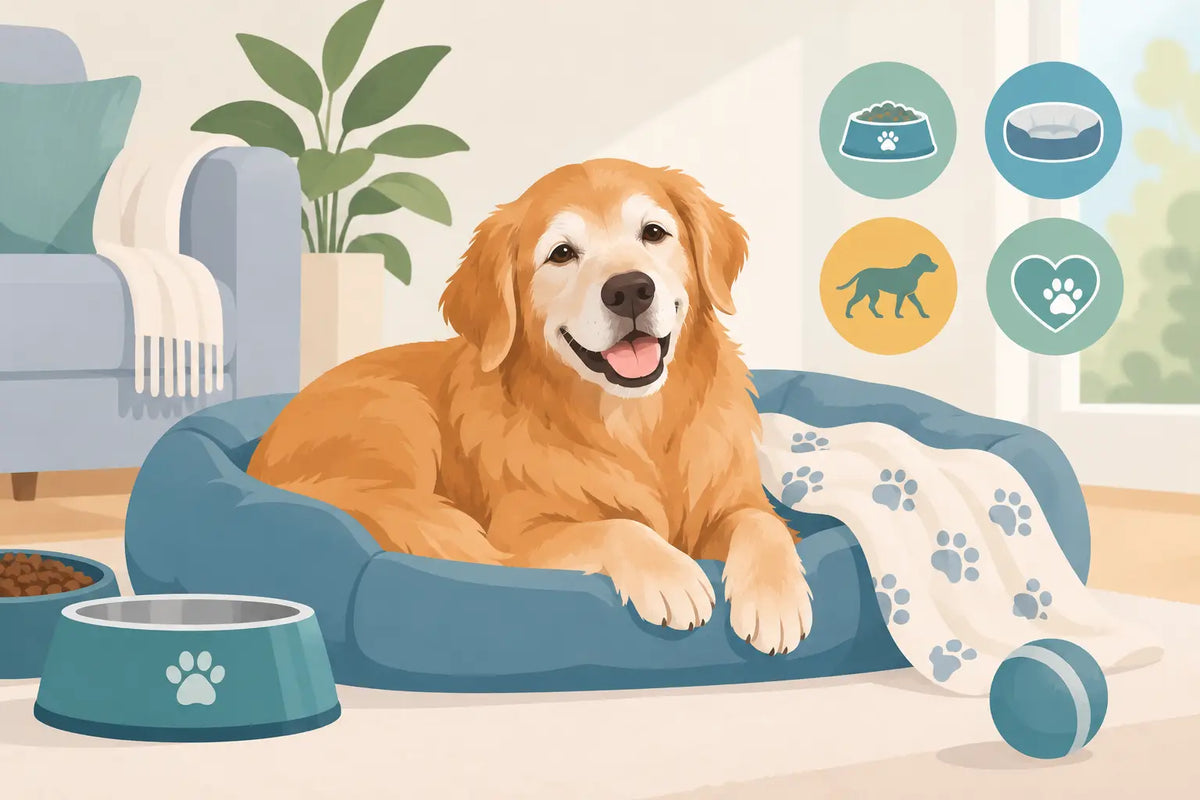
The gray whiskers are charming. The pause before the stairs can be harder to watch. Senior dogs often change in tiny, easy-to-miss ways: a favorite bed suddenly matters more, a walk gets shorter, the mail carrier feels a little more alarming, or the once-silky coat looks dull around the hips and shoulders.
Getting older does not mean your dog’s best days are behind them. It means their routine deserves a little more intention. With thoughtful observation, veterinary care, comfortable home habits, and daily wellness support tailored to their needs, many older pups can keep enjoying the good stuff: sunny spots, neighborhood sniff patrols, couch cuddles, and a healthy dose of happy.
When Is a Dog Considered Senior?
There is no single birthday when every dog becomes a senior. Size, breed, genetics, lifestyle, and health history all play a role. A giant-breed dog may show age-related changes by six or seven, while a small dog may still feel spry well into their teens.
Rather than circling a date on the calendar, look at your individual dog. Are they slower to rise after naps? Less eager to jump in the car? More sensitive to thunder, visitors, or changes in routine? These shifts are useful information, not a reason to panic. They are your cue to check in more closely.
Regular senior wellness visits are a smart foundation. Your veterinarian can help separate expected aging from concerns that need treatment, such as dental disease, arthritis, thyroid changes, hearing loss, vision changes, or cognitive decline. If a change is sudden, pronounced, or accompanied by pain, appetite loss, vomiting, breathing changes, or bathroom accidents, call your vet promptly.
The Little Signs Senior Dogs May Need More Support
Older dogs are masters of carrying on. They may still greet you at the door, still ask for dinner early, and still find the crinkliest toy in the basket. Pain or discomfort does not always look dramatic. It can look like choosing the rug over the hardwood floor, taking longer to settle at night, or walking behind you rather than pulling ahead.
Mobility changes are among the most common. Watch for stiffness after rest, reluctance with stairs, hesitation before jumping, a slower pace, or less interest in longer outings. Gentle movement is usually beneficial, but the right amount depends on the dog. One pup may thrive with several short, easy walks; another may prefer a leisurely backyard sniff and a food puzzle indoors.
Behavior can shift, too. A dog who was once unbothered by traffic may develop the storm-shakes. A formerly social pup may want more space from busy kids or unfamiliar dogs. Hearing and vision changes can make familiar situations feel surprising, while discomfort can shorten anyone’s patience. Calm support is not about making a dog sleepy. It is about helping them feel more settled in their own routine.
Skin and coat changes deserve attention as well. Dry flakes, frequent scratching, increased shedding, a dull coat, or thinning fur can have many causes, from seasonal dryness and allergies to nutrition or an underlying health issue. Persistent itching, redness, odor, sores, or ear trouble calls for veterinary guidance rather than guesswork.
Make Home Easier on Aging Joints
A few practical adjustments can protect energy for the moments your dog loves most. Put down nonslip runners where they walk most often, especially near food bowls, beds, and doorways. A supportive bed in a quiet, draft-free spot can make post-nap stiffness less of a production.
If jumping has become awkward, use a ramp or sturdy steps for the couch, bed, or car. Keep nails trimmed so paws can grip the floor, and avoid asking a stiff dog to rush through slippery spaces. A raised bowl may help some dogs eat more comfortably, though the ideal setup depends on their size and veterinary needs.
Movement still matters. Muscles support joints, and gentle activity helps keep bodies engaged. Skip the weekend-warrior plan of one huge hike after five quiet days. Consistent, lower-impact activity is kinder to many senior bodies. Let your dog set the pace, build in sniff breaks, and head home while their tail is still happily wagging.
Weight management belongs in this conversation, too. Even a few extra pounds can add strain to aging joints and make heat or exercise harder to handle. Your vet can help you assess body condition and make a realistic feeding plan. This is not about shrinking your dog’s joy. It is about preserving their ability to move through the day comfortably.
Build a Daily Routine That Feels Good
Senior care works best when it is wonderfully ordinary. Feed balanced meals at consistent times, refresh water often, keep exercise predictable, and give your dog a calm place to rest. Dogs who are losing hearing or vision may especially appreciate a familiar furniture layout and a gentle verbal cue before you touch or wake them.
Mental enrichment also keeps life bright. A slower body does not mean a less curious brain. Scatter a portion of dinner in the grass, offer an easy puzzle feeder, rotate familiar toys, or take a new route around the block. Let the walk be about sniffing, not mileage. Their zoomies may look different now, but they never fully retire.
Daily supplements can fit naturally into this rhythm when they target a clear need and complement, rather than replace, veterinary care. For mobility, look for functional ingredients with a purpose, such as glucosamine, turmeric, and New Zealand green-lipped mussel. For skin and coat support, collagen, biotin, and salmon oil are ingredients pet parents often seek for healthy-looking skin and a soft, glossy coat.
For dogs who have become more reactive or unsettled, choose support thoughtfully. A calm formula should not simply knock a dog out. Hemp Hounds takes a melatonin-free, non-sedating approach with THC-free hemp alongside ingredients like lavender, valerian root, and chamomile, designed for steady daily support rather than a groggy shortcut. As with any supplement, review the label, follow weight-based directions, and ask your veterinarian before adding something new, especially if your dog takes medication or has a diagnosed condition.
What to Expect From Daily Wellness Support
Supplements are not a same-day fix for years of wear, a stressful thunderstorm, or itchy skin with an untreated cause. The goal is gradual support that becomes part of a consistent care plan. Many pet parents look for small quality-of-life wins over 10 to 14 days: easier mornings, a more relaxed evening, less time spent fussing at dry skin, or more enthusiasm for the usual route around the block.
Track what you see. A note on your phone can help you spot patterns in sleep, scratching, appetite, walks, stairs, and mood. This is especially useful because progress is often subtle. Your dog may not suddenly act like a puppy again, and they do not need to. Comfortable, confident, engaged is a much better goal than trying to turn back the clock.
Give Them the Good, Slow Stuff
Aging asks us to pay closer attention. Notice the extra pause. Put the soft bed where the morning sun lands. Choose the shorter route when it is the happier one. Keep up with vet visits, make room for gentle movement, and support the needs you can see before they become the things your dog has to work around.
Your senior dog has spent years learning your rhythms, reading your face, and showing up for every ordinary day. Now, a few small acts of care can help make their next chapter feel just as full of tail thumps, treat crumbs, and perfectly timed naps.