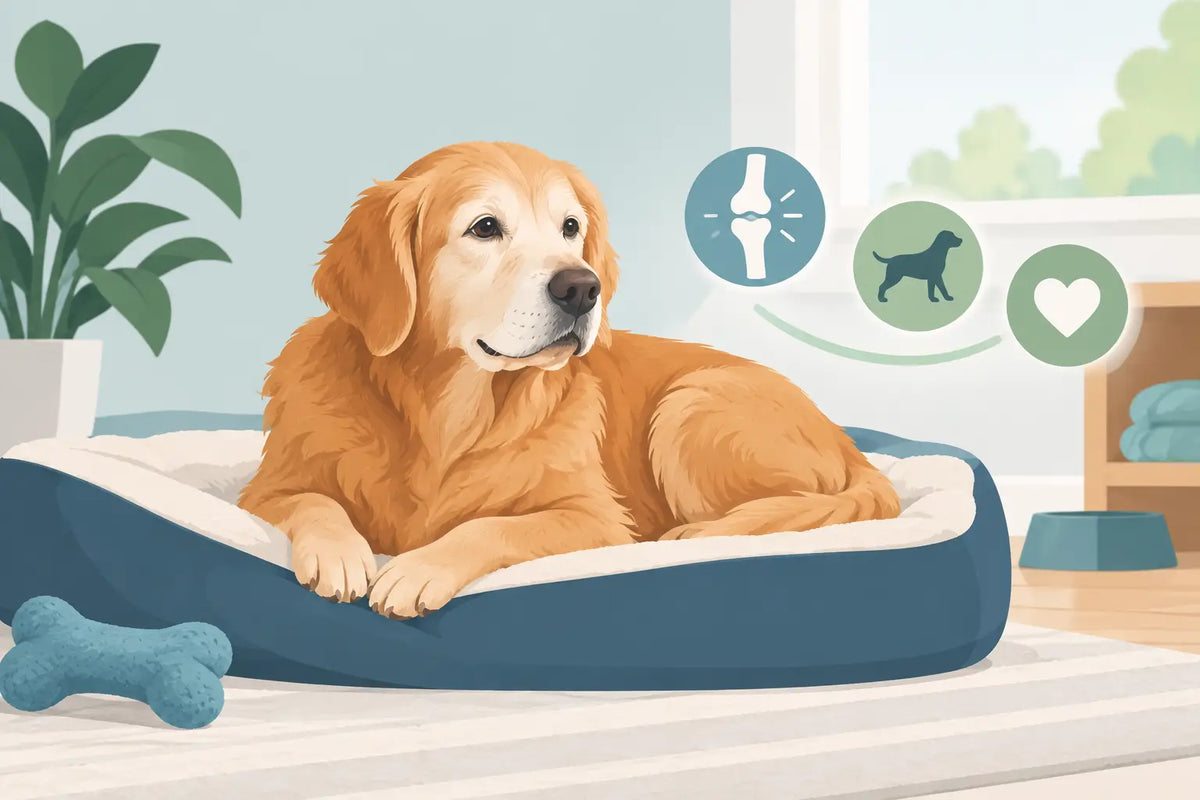
That little pause before the stairs can land hard on a dog parent. One day, your best friend is first to the leash. The next, they need a moment to get going after a nap. This senior dog stiffness guide helps you notice what has changed, make home life kinder on aging joints, and know when a veterinarian should be part of the plan.
Growing older does not mean your dog has to give up every good thing: the neighborhood sniff, the sunny patch on the rug, the happy trot toward dinner. It does mean their body may need more thoughtful support. Stiffness is common in older dogs, but it is still a signal worth listening to, not a personality trait to brush off as "just old age."
What senior dog stiffness can look like
Stiffness is not always a dramatic limp. It often shows up in small changes to a familiar routine. Your dog may rise slowly after sleeping, hesitate at the car door, lag behind on a walk, or take stairs one careful step at a time. Some dogs seem creaky only in the morning or after a big day at the park. Others become less interested in play, not because the zoomies retired, but because the recovery afterward feels tougher.
You may also notice subtle mood changes. A dog who once loved a full-body cuddle may pull away when a sore hip is touched. They may pant more after light activity, choose a different sleeping position, or become grumpy around other pets. Pain can make even the sweetest pup feel a little less like themselves.
Arthritis is a frequent contributor to stiffness in senior dogs, but it is not the only possibility. Old injuries, hip or elbow changes, muscle loss, excess body weight, tick-borne illness, spinal conditions, and a torn ligament can all affect movement. That is why a new or worsening change deserves a real conversation with your veterinarian.
When stiffness needs prompt veterinary care
Call your veterinarian promptly if your dog cannot bear weight, suddenly cries out, drags a paw, collapses, has a swollen limb, or seems painful at rest. Do not wait on a supplement or a home adjustment if those red flags are present.
A less urgent appointment is still wise when stiffness lasts more than a few days, appears repeatedly, or changes your dog’s normal behavior. A veterinarian can watch your dog walk, check joint range of motion, look for pain in the back or limbs, and recommend diagnostics when needed. Getting a clear picture early can protect more comfortable years ahead.
Never give your dog human pain medicine unless your veterinarian specifically instructs you to. Many common over-the-counter medications can be dangerous for dogs, even in amounts that seem small.
Make everyday movement easier at home
The best support plan is usually not one big change. It is a handful of small, repeatable choices that help your dog move with more confidence from morning through bedtime.
Start with traction. Slick hardwood, tile, and laminate floors can make a stiff dog brace every step. Place runners or washable rugs along the routes they use most, especially between their bed, food bowl, and back door. Keep nails neatly trimmed, too. Long nails alter paw placement and can make standing less comfortable.
Next, rethink the jumps. A ramp for the car or a set of sturdy pet stairs for the couch can spare joints from repeated impact. For dogs who use household stairs, a baby gate may prevent an unsupervised up-and-down expedition when no one is there to help. Choose a ramp with a non-slip surface and introduce it slowly with praise and treats. Confidence matters as much as equipment.
A supportive bed can also make a surprisingly big difference. Look for a firm, cushioned surface that is easy to step onto, positioned away from drafts. Keep water nearby so your dog does not need to trek across the house after settling down. For chilly mornings, a warm room and a gentle, brief warm-up walk can be friendlier than expecting a cold body to spring into action.
Movement is medicine, but pacing matters
A dog with stiff joints often needs consistent movement, not an all-or-nothing weekend warrior schedule. Several shorter, easy walks may feel better than one long outing. Let sniffing set the pace sometimes. Those slow neighborhood investigations are still exercise, plus a healthy dose of happy.
Low-impact options such as leash walks on level ground, controlled swimming, or professionally guided rehabilitation can help maintain strength without pounding sore joints. The right activity depends on your dog’s diagnosis, fitness, comfort level, and access to safe surfaces. A dog with advanced arthritis may need a very different plan than a dog recovering from a knee injury.
Watch the day after activity, not just the excitement during it. If your dog is noticeably slower to rise, limps more, or seems withdrawn after a longer adventure, scale back next time. The goal is to finish with a contented pup, not an exhausted one.
Body weight matters here, too. Even a little extra weight asks joints to carry more with every step. If your veterinarian recommends weight loss, a measured feeding plan can be one of the most meaningful mobility tools available. Skip drastic cuts or crash diets. Slow, veterinarian-guided progress is kinder and more sustainable.
Daily joint support: what to look for
For many dogs, veterinarian-directed care may include pain management, physical therapy, weight support, and a daily joint supplement. Supplements are not instant pain relief and cannot replace medical care for an injury or significant arthritis. They can, however, be a useful piece of a long-term routine when the ingredients and expectations are clear.
Look for formulas built around well-known mobility ingredients, such as glucosamine, turmeric, and New Zealand green-lipped mussel. Glucosamine is commonly used to support cartilage and joint function. Green-lipped mussel naturally contains compounds that support joint health, while turmeric is often included for its antioxidant properties. Quality, appropriate dosing, and consistency are more meaningful than a trendy front label.
If hemp is part of the formula, choose a product made for dogs that clearly states it is THC-free. Discuss it with your veterinarian first, especially if your dog takes prescription medications or has liver concerns. Avoid guessing with products made for people or using an unverified cannabis product from the pantry.
A daily chew can be especially practical when it feels like a treat instead of another pill battle. Hemp Hounds Hip & Joint soft chews pair THC-free hemp with glucosamine, turmeric, and New Zealand green-lipped mussel in a cold-pressed, beef-liver-flavored chew, without added sugar, fillers, preservatives, melatonin, or sedatives. Whatever product you choose, follow its weight-based directions and give it time. Joint routines tend to build gradually, often over 10 to 14 days or longer, rather than changing a dog’s mobility overnight.
Keep a simple note on your phone for two weeks: how readily your dog rises, how far they comfortably walk, whether stairs are easier, and how they seem the next morning. Real-life observations are much more useful than trying to remember whether Tuesday looked better than last Thursday.
The goal is more good moments
Senior-dog care is not about demanding puppy energy from a gray muzzle. It is about protecting the moments your dog still loves and adjusting the routine around the body they have now. A softer landing, steadier footing, sensible walks, and veterinarian-guided support can add up to easier days.
Tonight, watch how your dog gets up from their favorite spot. That small moment can tell you a lot, and responding with patience now is one of the sweetest ways to keep their world comfortably within reach.