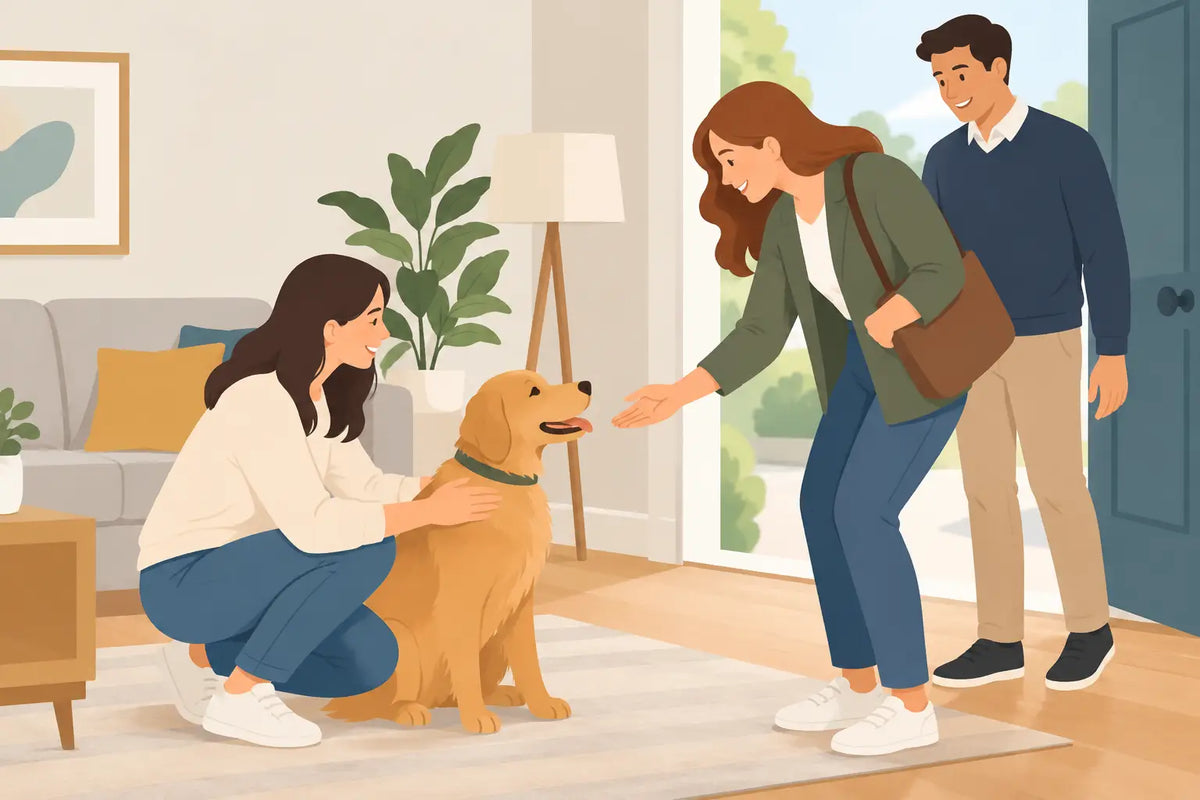
The doorbell rings, your dog hears a new voice, and suddenly the storm-shakes, barking, or full-speed laps around the living room begin. Figuring out how to ease dogs around visitors is not about making them love every houseguest. It is about helping them feel safe enough to make a choice other than panic, pacing, or playing backyard bouncer.
Some dogs greet every guest like a long-lost best friend. Others need a little more time, space, and predictability. Neither personality is wrong. With a thoughtful plan, you can make visits feel less like a surprise inspection and more like just another part of a well-loved home.
Start Before the Doorbell Rings
The most successful guest greeting often happens before anyone arrives. Dogs notice the little shifts: shoes being put on, a tidied living room, extra voices outside. If your pup tends to get worked up, build a calmer pre-visitor routine rather than waiting for the excitement to peak.
Give them a potty break or a sniff-heavy walk beforehand. Sniffing is not wasted time. It gives dogs a chance to gather information, move their bodies, and settle their minds. A dog who has had an opportunity to decompress is usually better prepared than one who has spent the afternoon watching the front window for danger.
Then set up their comfort zone. This could be a crate they already enjoy, a bedroom, a gated corner with a bed, or a quiet spot behind a baby gate. Add water, a favorite chew, and something that smells familiar. The goal is not to banish your dog from the fun. It is to give them an exit that does not require them to ask politely while feeling overwhelmed.
If your dog is reactive to sounds, turn on soft background music or a fan before the guest arrives. A quieter soundscape can take the sharp edge off the doorbell, car doors, and unfamiliar conversation.
How to Ease Dogs Around Visitors With a Low-Key Arrival
Ask guests to help by doing less, at least at first. Most well-meaning visitors want to greet the dog immediately, often with eye contact, a cheerful voice, and a hand reaching over the head. For a worried dog, that can feel like a lot of social pressure from a stranger who has just walked through the front door.
Instead, have your visitor come in calmly and ignore your dog for the first few minutes. No staring, no leaning over, no “It’s okay, buddy!” from across the room. They can turn slightly sideways, take a seat, and let your dog observe from a comfortable distance.
Keep your own voice relaxed too. Repeating “You’re fine” while gripping the leash and watching every movement can accidentally tell your dog that something big is happening. Speak normally, move slowly, and let your dog take in the scene.
If you use a leash during arrivals, keep it loose whenever safely possible. A tight leash can make a dog feel trapped, especially if they cannot move away from the person making them uneasy. For dogs with a bite history or serious fear response, prioritize safety and work with a qualified positive-reinforcement trainer or veterinary behavior professional on a tailored plan.
Let Your Dog Make the First Move
Curiosity is a great sign, but it should be voluntary. Let your dog approach, sniff, and retreat as many times as they need. A visitor can gently toss a treat away from themselves rather than offering it from their hand. This gives your dog a happy association with the guest without forcing close contact.
Tossing the treat away matters. Your dog can choose to enjoy the snack, then create distance again. That is very different from luring a nervous pup close enough to take a treat and then reaching for a pet.
When your dog approaches with a loose body, soft eyes, and a wiggly tail, your guest can continue to be pleasantly boring. Affection can come later, if your dog asks for it. A dog leaning in for contact is giving a different message than a dog who freezes, turns their head away, licks their lips, or retreats behind your legs.
Learn the Signs That They Need a Break
Not every anxious dog barks or growls. Some get very still. Others yawn repeatedly, pace, pant when the room is not warm, shed more than usual, or keep scanning the room. These can be early signs that their social battery is running low.
A growl deserves special respect. It is communication, not misbehavior. Punishing a growl can remove the warning without changing the fear underneath. Instead, calmly increase the distance between your dog and the visitor, then give your pup time in their safe space.
Kids need extra guidance here. Even gentle children may want to hug, follow, or pet a dog who is trying to take a break. Make the rule simple: when the dog is in their bed, crate, or quiet room, they are off duty. No reaching in, no calling them out, and no surprise cuddles.
Keep the Visit Within Your Dog’s Comfort Zone
A calm five-minute introduction is more valuable than an hour-long visit your dog has to endure. If your pup settles nicely for a while, great. If they retreat to their room after saying hello, that is great too. Success is not measured by how much attention they give the guest.
It also helps to match the plan to the dog in front of you. A young, social dog may settle after a quick game in the yard and a few minutes of practice. A senior dog with reduced hearing, sore hips, or a stronger preference for quiet may be much happier resting behind a gate with a chew. The zoomies may never retire, but even the most playful dog deserves the right to opt out.
For longer gatherings, schedule decompression breaks. Take your dog outside for a sniff, refresh their water, or guide them to their quiet area before they become overstimulated. Holiday parties and busy family visits can be especially tough because people move around, voices get louder, and food appears at dog-nose height.
Keep the entryway clear, secure trash and snacks, and remind guests not to feed your dog unless you say so. A calm environment is safer for everyone.
Build a Routine, Not a One-Time Fix
Visitor comfort grows through repetition. Start with one calm friend rather than a full house. Practice the same routine: prepare the space, offer a walk or sniff break, bring the guest in quietly, and reward your dog for calm choices. Over time, the pattern becomes familiar.
You can also practice the sounds that start the spiral. Ring the doorbell softly or play a door-knock recording at low volume, then reward your dog for looking at you, going to their mat, or staying relaxed. Increase the difficulty slowly. If your dog starts barking frantically, the step was simply too big. Go back to an easier version next time.
Daily wellness habits can support this work, too. Consistent sleep, appropriate exercise, enrichment, and a predictable feeding schedule all help dogs handle change more comfortably. For pet parents seeking a non-sedating addition to a calm routine, Hemp Hounds Calm soft chews pair THC-free hemp with lavender, valerian root, and chamomile, without melatonin, fillers, or a knocked-out feeling. Think steady support, not a shortcut around training, management, or your dog’s boundaries.
If anxiety is sudden, intense, or getting worse, check in with your veterinarian. Pain, hearing changes, vision changes, and other health concerns can make ordinary visitor behavior feel much harder for a dog to navigate.
Give Your Dog Permission to Be Themselves
Your dog does not owe every visitor a greeting, a trick, or a cuddle. The real win is a dog who knows they are safe, and a pet parent who can read the room before it becomes too much.
With a quieter arrival, a cozy escape route, and plenty of chances to choose space, even the doorbell can become less of a big deal. That is a healthy dose of happy for your pup and a much more relaxed welcome for everyone walking through your door.