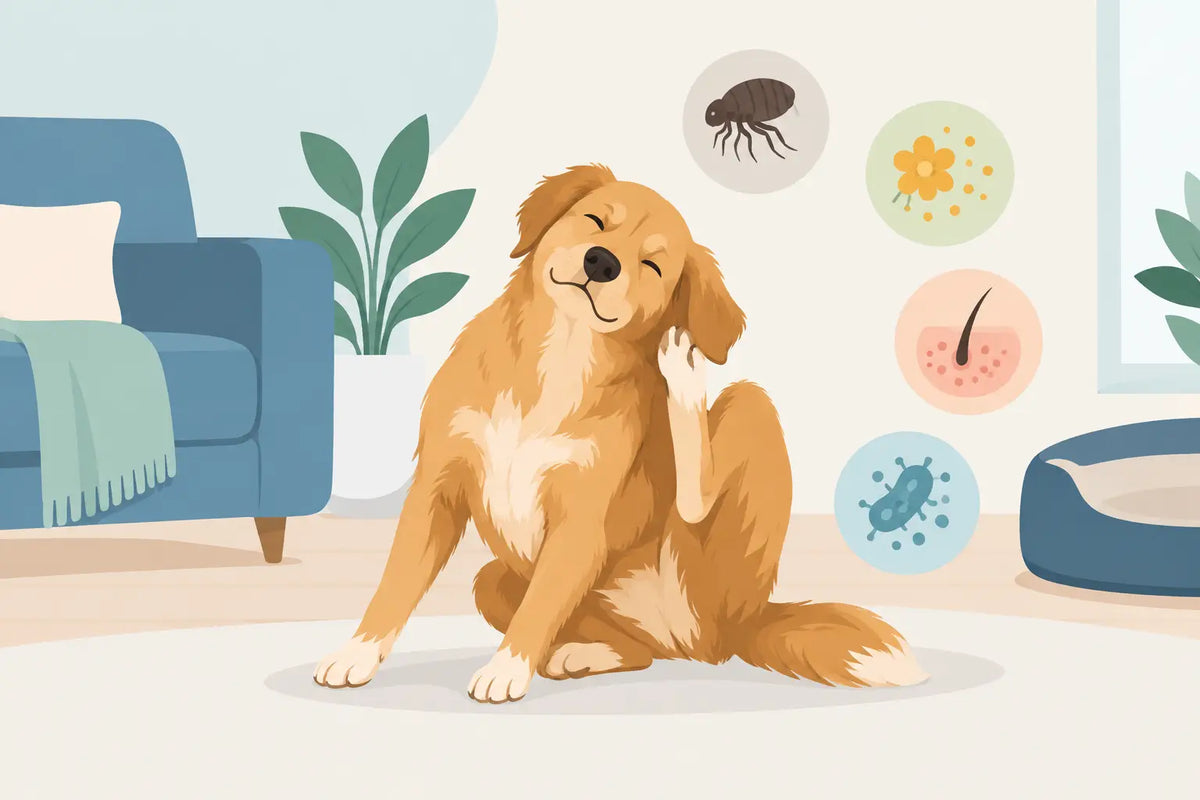
That middle-of-the-night jingle of a collar, followed by the thump-thump-thump of a back paw, can make any dog parent wonder: why is my dog scratching? An occasional itch is part of being a dog. But when your pup is interrupting naps, chewing their paws, rubbing their face on the rug, or leaving little flakes on the couch, it is worth taking a closer look.
Scratching is a symptom, not a personality quirk. The good news is that many causes are manageable once you know what you are looking for. The not-so-fun part? Skin irritation can have more than one trigger at a time. A dry winter coat, a missed flea, and a new chicken treat can all make your dog feel extra itchy.
Why Is My Dog Scratching So Much?
The location, timing, and appearance of the itch can offer useful clues. Start by noticing when your dog scratches and what else is happening around it. Did it begin after a hike, a bath, a food switch, or a change in the weather? Are they scratching their ears, licking their paws, or nibbling near the base of the tail?
Fleas and other pesky visitors
Fleas are tiny, fast, and very good at hiding, especially in thick coats. You may not see a flea itself, but you might spot flea dirt - tiny black specks that turn reddish brown when damp - around the neck, belly, groin, or base of the tail. Dogs with flea sensitivity can become intensely itchy from just one bite.
Ticks, mites, and lice can also cause irritation, though they need a veterinary diagnosis and the right treatment. If your dog is suddenly frantic with scratching or you notice crusty skin, hair loss, or scabs, do not assume it is simple dryness.
Seasonal and environmental allergies
Just like us, dogs can react to pollen, grass, mold, dust, and household irritants. Seasonal itch often shows up as paw licking, face rubbing, ear irritation, or redness on the belly after time outdoors. For some pups, spring is sniffari season. For others, it is the beginning of the paw-chewing Olympics.
Environmental allergies can be tricky because avoiding every trigger is rarely realistic. Wiping paws after walks, washing bedding regularly, and rinsing off pollen after a big park day may reduce what is sitting on your dog's skin and coat. Your vet can help identify a longer-term plan when symptoms keep returning.
Dry skin and a stressed-out coat barrier
Dry indoor air, frequent bathing, harsh shampoos, and cold weather can leave skin feeling tight and flaky. You may notice dull fur, dandruff, or mild all-over scratching without obvious sores. Some dogs also have naturally drier skin than others, especially as they age.
A healthy coat is more than a photo-ready shine. It helps support the skin barrier, which is your dog's first line of defense against the outside world. Gentle grooming, a dog-specific moisturizing shampoo when needed, and nutrition that supports skin from within can all have a place here.
Food sensitivities
Food-related itch can look a lot like environmental allergies. Repeated ear trouble, paw licking, face rubbing, and year-round itch are common patterns worth discussing with your veterinarian. It is not always the newest food or the most obvious ingredient, either.
Avoid changing foods every few days in search of an answer. That can make it harder to identify what is going on and may upset your dog's stomach. If your vet suspects a food sensitivity, they may recommend a structured elimination diet. It takes patience, but it gives you clearer information than guesswork.
Ear, skin, or yeast infections
Sometimes the scratch is a sign that something has already moved beyond irritation. Red, warm skin; a sour or musty smell; greasy patches; discharge from the ears; bumps; or repeated head shaking can point to an infection. These need veterinary care, not a new shampoo and crossed paws.
Dogs can also create a cycle: itch leads to licking, licking adds moisture and irritation, then the irritated spot becomes even itchier. Early attention can spare your pup a lot of discomfort.
A Quick At-Home Itch Check
Set aside a calm moment when your dog is relaxed. Part the fur and look closely at the skin, especially around the ears, paws, belly, armpits, and tail base. You are not trying to diagnose every freckle. You are simply gathering useful details for yourself and your vet.
Watch for these signs:
- Redness, scabs, bumps, bald patches, flakes, or darkened skin
- Fleas or black flea dirt near the tail base and belly
- Ear odor, waxy buildup, discharge, or frequent head shaking
- Constant paw chewing, face rubbing, or bottom scooting
- A pattern tied to walks, meals, baths, seasons, or a new product
When to Call the Vet About Dog Scratching
A little occasional scratching can wait for your next routine visit. But call your veterinarian promptly if your dog has open wounds, swelling, hives, facial puffiness, bleeding, sudden hair loss, severe pain, or trouble breathing. Those symptoms need timely attention.
It is also smart to make an appointment when itching lasts more than a few days, disrupts sleep, keeps coming back, or is paired with ear issues, odor, diarrhea, or behavior changes. Your vet may check for parasites, infection, allergies, hormonal conditions, or other causes that cannot be sorted out by looking at the coat alone.
Please skip human antihistamines, essential oils, medicated creams, and leftover prescriptions unless your veterinarian specifically tells you what to use and how much. Dogs are not tiny furry humans, and even well-meaning home remedies can cause trouble.
Supporting Skin and Coat Between Vet Visits
Once you have ruled out urgent problems, steady everyday care can help your dog feel more like themselves. Keep parasite prevention current, use gentle dog-specific grooming products, and avoid over-bathing. If outdoor allergens seem to be a factor, a quick paw wipe and belly rinse after walks can be a small habit with a big payoff.
Nutrition matters, too. Skin and coat support is not an overnight fix, because hair growth and skin turnover take time. Look for daily formulas with ingredients that make sense for the job, such as collagen, biotin, and quality salmon oil. Hemp Hounds Skin & Coat Soft Chews pair those ingredients with THC-free hemp in a soft, beef-liver-flavored chew, without added sugar, fillers, preservatives, or synthetic stand-ins.
A supplement should support a healthy routine, not replace veterinary care for parasites, infections, or serious allergies. Give any daily wellness routine time to build - many pet parents watch for gradual changes over 10 to 14 days, like less flaky skin, a softer coat, or fewer itch-driven interruptions.
Your dog cannot tell you that their paws feel prickly or their ears are bothering them. But the clues are there in the extra licking, the restless naps, and the sudden need to scratch at the rug. A little detective work, thoughtful daily care, and the right veterinary support can help bring back the good stuff: cozy couch naps, carefree walks, and all the zoomies your pup has saved up.