Last Updated: November 19, 2026
Quick Summary
Colloidal oatmeal baths and cool water are the safest first step for mild dog skin allergies, soothing widespread itch in 10 to 15 minutes. Herbal soaks like chamomile are gentle but unproven, and remedies only work once you identify what is driving the itch.
- Paws, face, and ear itching points to environmental allergens, while widespread itch suggests food or infection.
- Hot spots that spread, a bad smell, or broken skin mean a vet visit before any home remedy.
- Dilute apple cider vinegar one part to three or four parts water and never apply it to open skin.
- An elimination diet trial runs eight to twelve weeks with no treats, scraps, or flavored chews.
- Rate itch from 1 to 10 each evening and photograph hot spots weekly to see what works.
Table of Contents
- Why Your Dog's Itching Needs a Cause Before a Remedy
- What Can I Put on My Dog to Relieve Itching? Home Remedies Ranked by Evidence
- How to Make a Homemade Dog Anti Itch Spray Without Making It Worse
- Apple Cider Vinegar for Dog Itching: What Dilution Actually Does
- A Natural Antihistamine for Dogs Is Not the Same as an Allergy Fix
- Diet, Omega-3s, and Food Allergy Trials That Change the Outcome
- Tracking Itch Severity So You Know What Is Working
- Building a Daily Skin and Coat Routine With Hemp Hounds
- Frequently Asked Questions
Why Your Dog's Itching Needs a Cause Before a Remedy
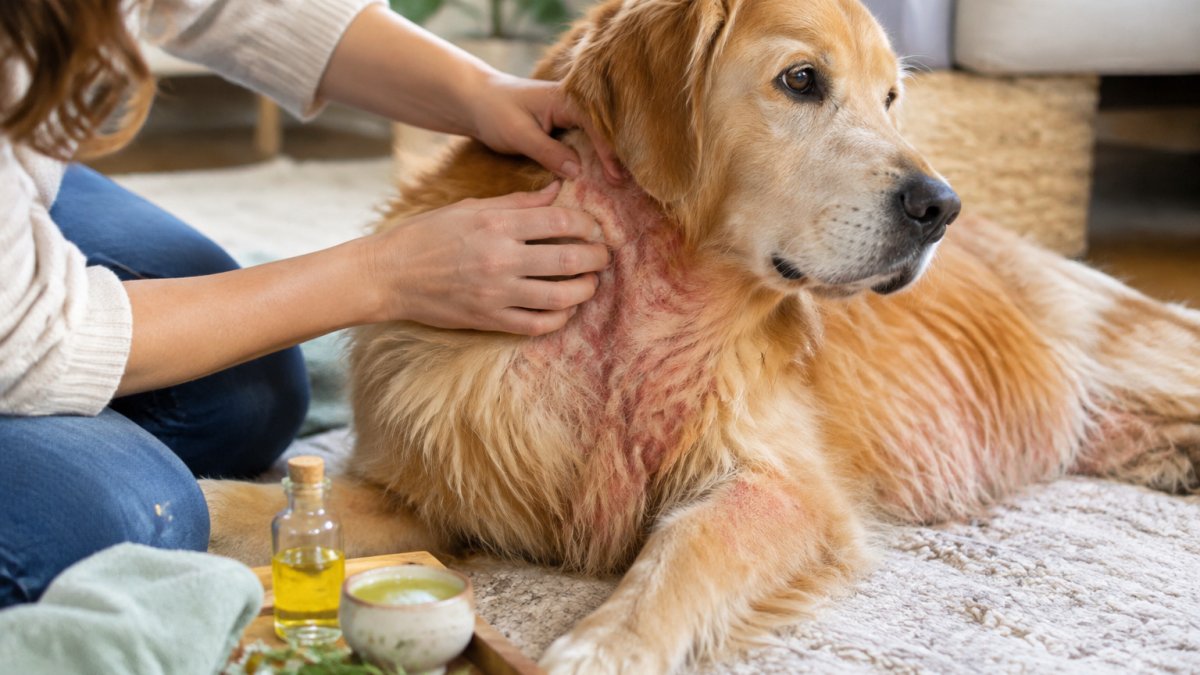
Your dog is scratching, licking, and chewing, and you want it to stop tonight. We get it. But here is the hard truth: natural remedies for dog skin allergies work best when you know what is driving the itch, and dog skin allergies rarely have a single obvious cause. Treat the wrong cause and you waste weeks.
Itching, or pruritus, is a symptom, not a diagnosis (Itching (Pruritus) in Dogs - Dog Owners). It can come from pollen, dust mites, fleas, food, or a skin infection brewing underneath. A remedy that soothes dry skin will do little for a flea problem.
Below, we walk you through a simple decision path, then rank the remedies that hold up.
A Simple Decision Path for Itchy Skin
Start by asking three questions.
- Where is the itch? Paws, face, and ears point to environmental allergens. A widespread itch points to food or infection.
- When did it start? Seasonal itching suggests pollen. Year-round itching suggests food or dust mites.
- Is the skin broken? Redness, crust, or hair loss means a vet visit first.
Answer those and you narrow the field fast.
Red Flags That Mean a Vet Visit First
Some signs need a professional before any home remedy. Watch for:
- Hot spots that spread or weep
- A bad smell, which often signals a secondary infection
- Constant licking that breaks the skin
- Ear infections that keep returning
- Weight loss or lethargy
Neither will oatmeal. Get those checked first.
What Can I Put on My Dog to Relieve Itching? Home Remedies Ranked by Evidence
The short answer: colloidal oatmeal and cool water are the safest first step for mild irritation. Herbal soaks are gentle but unproven. Rank them by evidence, not by what a forum swears by.

Here is how the options stack up.
| Remedy | Best For | Caution |
|---|---|---|
| Colloidal oatmeal bath | Soothing widespread itch | Rinse well, dry fully |
| Coconut oil | Dry, flaky patches | Small amounts only |
| Aloe vera gel | Mild redness | Must be pure, no alcohol |
| Chamomile soak | Calming irritated skin | Patch test first |
| Apple cider vinegar | Mild surface itch | Always dilute |
Oatmeal Baths and Colloidal Oatmeal
An oatmeal bath is the most reliable home remedy for itchy skin. Colloidal oatmeal, the finely ground kind, suspends in water and coats the skin. It cools, moisturizes, and calms irritation.
How to do it:
- Fill a tub with lukewarm water.
- Stir in colloidal oatmeal until the water looks milky.
- Let your dog soak for 10 to 15 minutes.
- Rinse gently and pat dry.
A common mistake is using breakfast oats straight from the pantry. They sink and do little. Buy colloidal oatmeal made for pets or people.
Coconut Oil, Aloe Vera, and Chamomile Soaks
Use a small amount and rub it into the rough patches. Watch out: too much oil traps heat and invites licking.
Use pure gel with no alcohol or added fragrance. Dogs often lick it off, so apply it where they cannot reach easily.
Brew strong tea, cool it, and pour it over the coat.
How to Make a Homemade Dog Anti Itch Spray Without Making It Worse
A homemade dog anti itch spray is simple to make, but the wrong mix can sting. Keep it basic: cooled chamomile tea or diluted colloidal oatmeal water in a clean spray bottle.
Follow these steps:
- Brew one chamomile tea bag in two cups of water.
- Let it cool completely.
- Pour it into a spray bottle.
- Test a small patch of skin first.
- Spritz the itchy areas and avoid the eyes.
Watch out: never spray a broken or bleeding patch. That invites infection and pain. Store the spray in the fridge and make a fresh batch every few days.
Apple Cider Vinegar for Dog Itching: What Dilution Actually Does
Apple cider vinegar for dog itching is popular, but dilution matters. Straight vinegar burns. A safe mix is one part vinegar to three or four parts water.
What it does: the mild acidity can balance surface pH and calm light itch. What it does not do: control allergic inflammation. Vetster's guidance on managing dog allergies notes that remedies like apple cider vinegar and coconut oil are not substitutes for controlling allergic inflammation.
A few rules:
- Never use it on open skin.
- Skip it if your dog has a vinegar sensitivity.
- Do not spray it near the eyes, ears, or nose.
If your dog yelps or the skin reddens, stop.
A Natural Antihistamine for Dogs Is Not the Same as an Allergy Fix
Owners often ask us about a natural antihistamine for dogs. Here is the honest answer: most natural options calm symptoms at best. They do not switch off the allergic reaction, and they are not a substitute for identifying the trigger.
It helps to know what the common options actually do.
- Antihistamine drugs such as diphenhydramine or cetirizine are sometimes used in dogs, but only under veterinary direction, doses are weight-based and some dogs should not take them. Never give a human antihistamine product that contains decongestants or other added ingredients.
A few cautions apply across the board. Quercetin can interact with some medications, and fish oil at high doses can cause loose stool or affect clotting, so check with your vet before combining supplements or before surgery. None of these options should be given to a dog with an undiagnosed skin infection, because calming the itch can mask a problem that is getting worse.
The evidence base is genuinely thin. A comparative study on classical and alternative therapy for dogs with allergic skin issues looked at acupuncture, plant therapy, and nutrition and did not report a clear measurable outcome, which tells you how early this research still is. Treat these options as support, not a cure, and judge them against a written itch log rather than a feeling.
Diet, Omega-3s, and Food Allergy Trials That Change the Outcome
Food allergies are the most under-diagnosed cause of chronic itching. If your dog itches year-round and nothing topical helps, diet is the next stop.
The gold standard is an elimination diet. Your vet guides you through a novel protein or hydrolyzed diet for eight to twelve weeks. No treats, no table scraps, no flavored chews during the trial.
Add them slowly and check with your vet on dose.
A common mistake is switching foods for a week and calling it a trial. Real trials take patience.
Tracking Itch Severity So You Know What Is Working
You cannot tell what works if you do not measure it. Keep a simple daily log.
- Rate itch from 1 to 10 each evening
- Note the remedy used and the time
- Photograph any hot spots weekly
- Record diet changes and new treats
After two weeks, patterns appear. If the score drops, keep going. If nothing changes, change the plan. This log also gives your vet real data instead of guesses.
Building a Daily Skin and Coat Routine With Hemp Hounds
A daily routine supports skin health between flares. That means gentle cleansing, paw cleaning after walks, clean bedding, and flea prevention on schedule.
Nutrition can be part of that routine too. Our skin and coat chews are made with natural hemp oil and adaptogenic herbs, and they are THC-free and melatonin-free. One customer put it simply: "the scratching stopped, and that coat? unreal glossy."
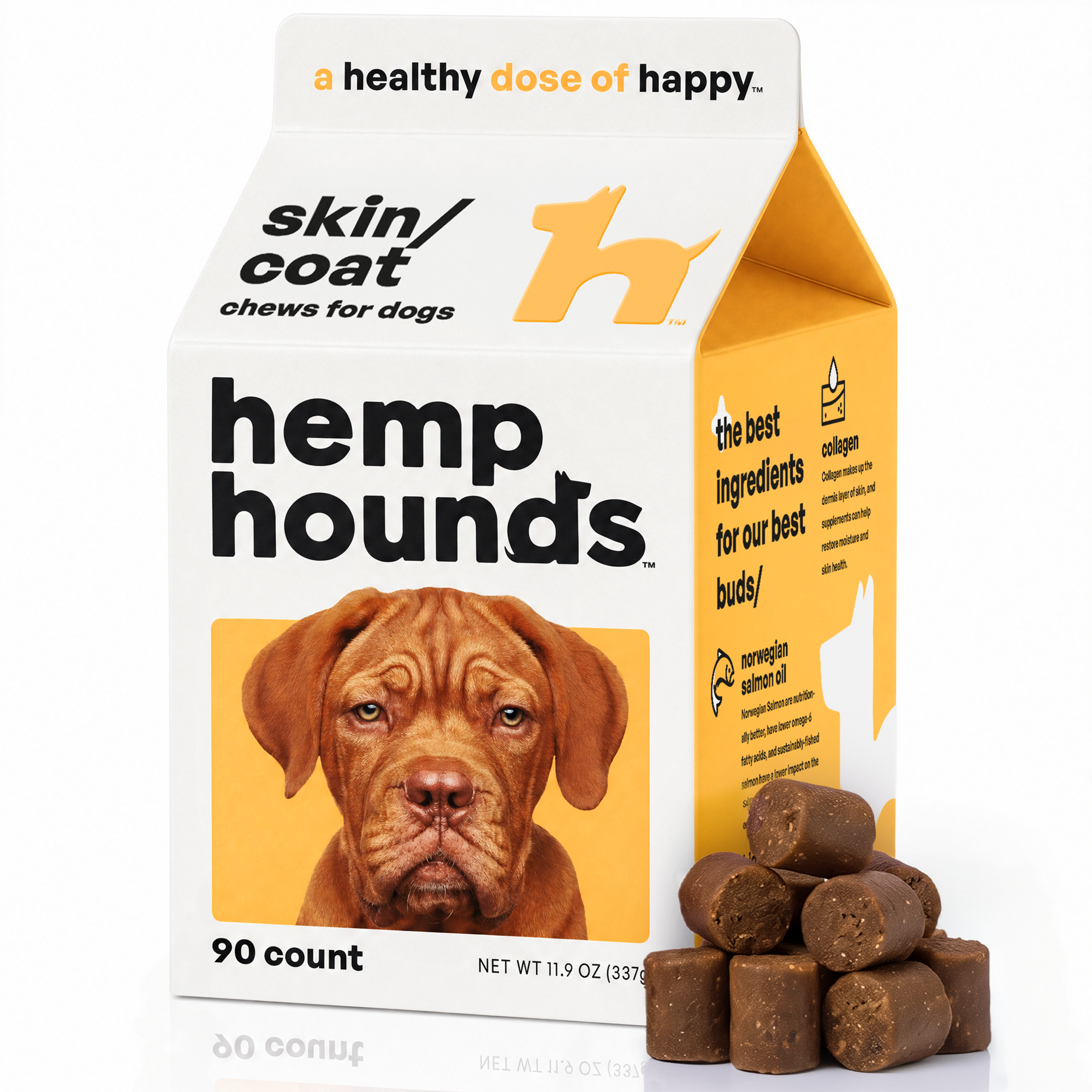
Pair the chews with the habits above for steady support. Small daily steps beat frantic fixes every time.
Your dog's itching is not something you have to guess at. Build a routine that treats the cause, soothes the skin, and supports the coat from the inside. Hemp Hounds chews are handcrafted in the USA with raw-state hemp and adaptogenic herbs, free from fillers, and made in plastic-free packaging. They suit all breeds and sizes, and dogs love the beef liver flavor. Get started with Hemp Hounds and give your dog calmer, healthier skin.
Frequently Asked Questions
What is the best home remedy for dog skin allergies?
A colloidal oatmeal bath is the safest first step for most dogs with itchy, irritated skin. Use finely ground colloidal oatmeal in lukewarm water for 10 to 15 minutes, then pat dry. Pair it with flea prevention, clean bedding, and paw cleaning after walks. If itching lasts more than two weeks or comes with hair loss, sores, or ear odor, have a vet examine your dog before continuing home care.
Does apple cider vinegar stop itching on dogs?
Apple cider vinegar should be used only on intact skin. Always dilute it, roughly one part vinegar to three or four parts water, and never apply it to open hot spots, raw paws, or the face. Skip it entirely if your dog has scratched the skin broken, since the acid stings. Remedies like apple cider vinegar are not a substitute for veterinary management of allergic inflammation.
Can I make a homemade anti-itch spray for my dog?
Yes, one common base is cooled brewed chamomile or green tea. Strain it, pour it into a spray bottle, and mist affected areas or soak a cloth and press it onto the skin. Keep the spray refrigerated for up to three days and make small batches. Avoid adding essential oils, since many are toxic to dogs, and do not spray near the eyes, nose, or mouth. Stop if your dog's redness or scratching increases after use.
When should I take my dog to the vet for itchy skin?
Book a vet visit if your dog scratches constantly for more than two weeks, develops bald patches, hot spots, scabs, or a musty smell, or seems uncomfortable despite home remedies. Prompt care is also needed for sudden severe itching, facial swelling, hives, or itching that starts after a new food or medication. These signs can point to a secondary infection or a serious allergic reaction that topical remedies will not resolve. A vet can run skin scrapings, check for fleas and mites, and discuss food elimination diets if needed.
