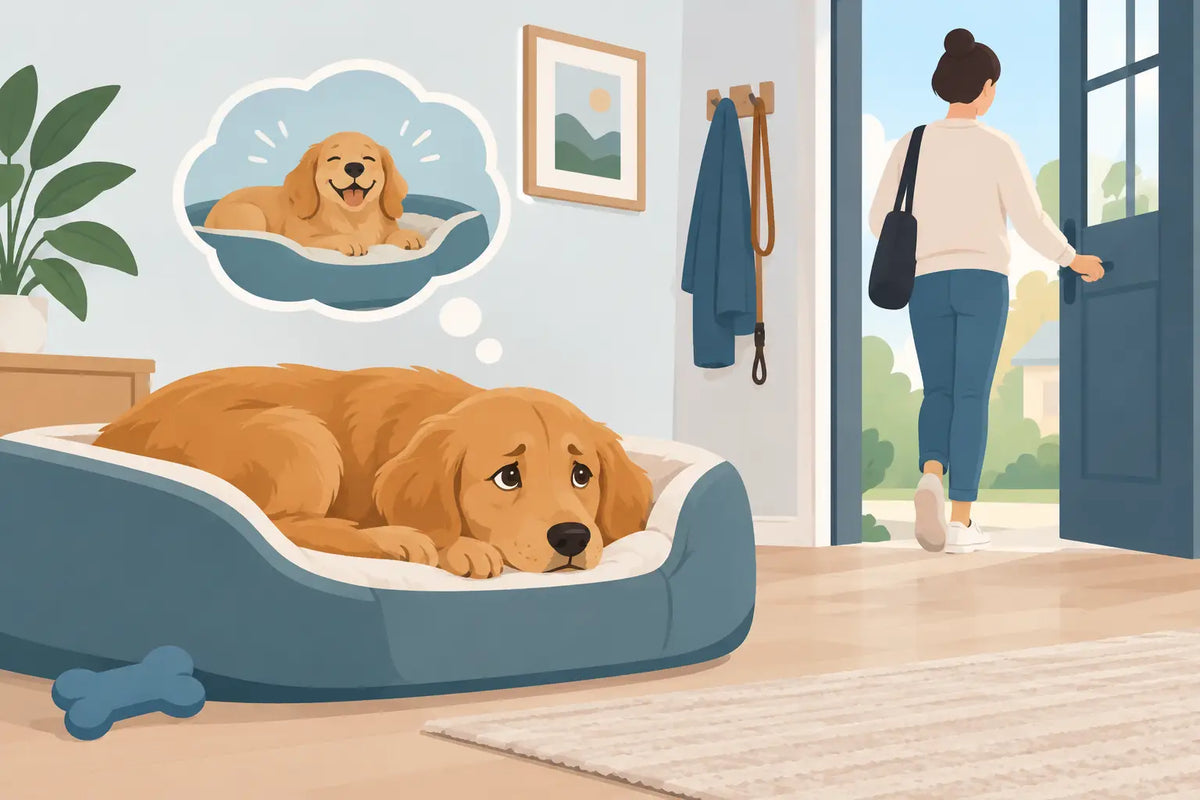
The torn throw pillow is frustrating. The trembling, drooling, or frantic barking behind the door is the part that breaks your heart. If you’re trying to help dog with separation anxiety, the goal is not to make them “get over it” by waiting it out. It is to show them, in small repeatable ways, that being alone is safe - and that you always come back.
True separation anxiety is more than a dog who prefers company or gets a little bored after you leave. It is distress that starts around departures and can continue while you are gone. The good news: with thoughtful training, predictable routines, and the right professional support when needed, many dogs can feel much more settled.
Know the difference between worry and a bad habit
Dogs do not shred a couch to make a point. They may chew, scratch doors, pace, howl, eliminate indoors, or attempt to escape because they are panicking. Some pups begin the moment shoes go on or keys jingle. Others seem fine for 10 minutes, then their worry builds.
A pet camera can be surprisingly helpful here. Watch the first 30 to 60 minutes after you leave. Does your dog settle down with a chew or nap? Or do they pace, vocalize, pant, and stare at the door? That information helps you distinguish separation-related distress from a young dog with extra energy, an unmet potty need, or a noisy neighborhood.
It also gives you useful notes for your veterinarian or a qualified behavior professional. Sudden anxiety in a previously relaxed dog deserves a vet conversation, especially for senior dogs. Pain, changes in hearing or vision, cognitive changes, and other medical concerns can make alone time harder.
Start by making departures less dramatic
We humans are very good at accidentally turning departures into an event. “Mommy will be right back!” can sound sweet, but a big emotional goodbye may signal that something major is about to happen.
Aim for calm, boring exits and equally low-key returns. Put on your shoes, pick up your bag, and leave without fanfare. When you come home, give your dog a few quiet moments to settle before greeting them warmly. You are not withholding affection. You are teaching them that comings and goings are ordinary parts of a safe day.
Practice the cues that currently trigger the storm-shakes. Pick up your keys, then sit back down. Put on your coat, make tea, and stay home. Open the door, close it, and return to the couch. Repeat these tiny exercises often enough that keys and shoes stop predicting a long, lonely stretch.
Build alone time in tiny, winnable steps
The most effective way to help a dog with separation anxiety is usually gradual exposure. That means leaving for a duration your dog can handle without panicking, returning before their distress rises, and building from there.
For one dog, that starting point may be 20 seconds. For another, it may be two minutes. This can feel painstaking, but rushing is often what keeps the cycle going. If your pup panics at five minutes, practicing 30-minute absences is not teaching calm. It is rehearsing fear.
Start after your dog has had a potty break and a little appropriate activity. Step outside, return calmly, and repeat until that duration looks easy on camera or through the door. Add time gradually, not in giant leaps. Some days you may hold steady instead of progressing. That is not failure. It is smart training.
Whenever possible, avoid leaving your dog alone beyond their current comfort level while you train. A neighbor, family member, dog sitter, daycare, or a work-from-home buddy can bridge the gap. Management is not cheating. It protects the progress you are working so hard to build.
Create a departure routine your dog can count on
Before you leave, give your dog a chance to use their brain and body without getting them overly amped up. A sniffy walk, a scatter of part of their meal in the grass, or a few minutes of easy training can take the edge off. Think decompression, not boot camp.
Then create a calm landing spot. Some dogs relax in a quiet room with soft background sound and a cozy bed. Others do better with access to their usual living area, where the familiar smells are. Offer a special food puzzle or safe long-lasting chew only when you step out, if your dog is calm enough to enjoy it.
Crates are not automatically calming. For a dog who already loves their crate, it can be a peaceful den. For a dog who tries to break out, bites the bars, or becomes more frantic when confined, a crate may increase the risk of injury and distress. Let your dog’s behavior guide the setup.
Support calm without trying to knock them out
A sleepy dog is not always a relaxed dog. Sedation can reduce visible activity without addressing the fear underneath, which is why it is worth being cautious about quick-fix promises.
A consistent wellness routine can complement training for dogs who are generally tense around departures. Hemp Hounds Calm Chews pair THC-free hemp with lavender, valerian root, and chamomile in a melatonin-free, non-sedating daily chew. They are designed for steady support, not an instant off switch, so use them alongside a training plan rather than in place of one.
As with any supplement, check with your veterinarian first, particularly if your dog takes medication, is pregnant, has a health condition, or has had unusual reactions to calming products before. If you and your vet choose a daily wellness supplement, consistency matters. Many pet parents look for changes over 10 to 14 days, not one rushed morning at the front door.
Skip the “cry it out” approach
It is tempting to think a dog will eventually stop barking if no one responds. But panic rarely resolves because a dog is forced to endure more of it. Repeated overwhelming absences can make the next departure feel even scarier.
Avoid punishment when you get home, too. Your dog cannot connect a scolding with something they did an hour ago, and punishment can make your return another source of tension. The same goes for anti-bark devices and other aversive tools. A quieter dog is not necessarily a less frightened dog.
Instead, look for the small signs that the plan is working: your dog takes their treat after you leave, stops pacing sooner, lies down, or recovers faster after hearing the door. Those little wins are the foundation of a calmer household.
When to bring in professional help
Some dogs need more than home practice, and there is no shame in that. Contact your veterinarian promptly if your dog injures themselves trying to escape, will not eat when alone, has intense panic, or cannot tolerate even a few seconds of separation. Your vet can rule out medical issues and discuss whether medication may make training more manageable.
A certified separation-anxiety trainer or credentialed behavior professional can also build a plan around your dog’s exact threshold. This is especially valuable when real life makes gradual absences difficult or when multiple triggers are involved, such as moving, a new baby, a schedule shift, or the loss of another pet.
Your dog does not need a perfect routine or a perfectly silent house to feel safer. They need patient practice, predictable care, and a person willing to notice what their body is saying. Start with one short, successful absence today. For a worried pup, that can be the beginning of a very big exhale.