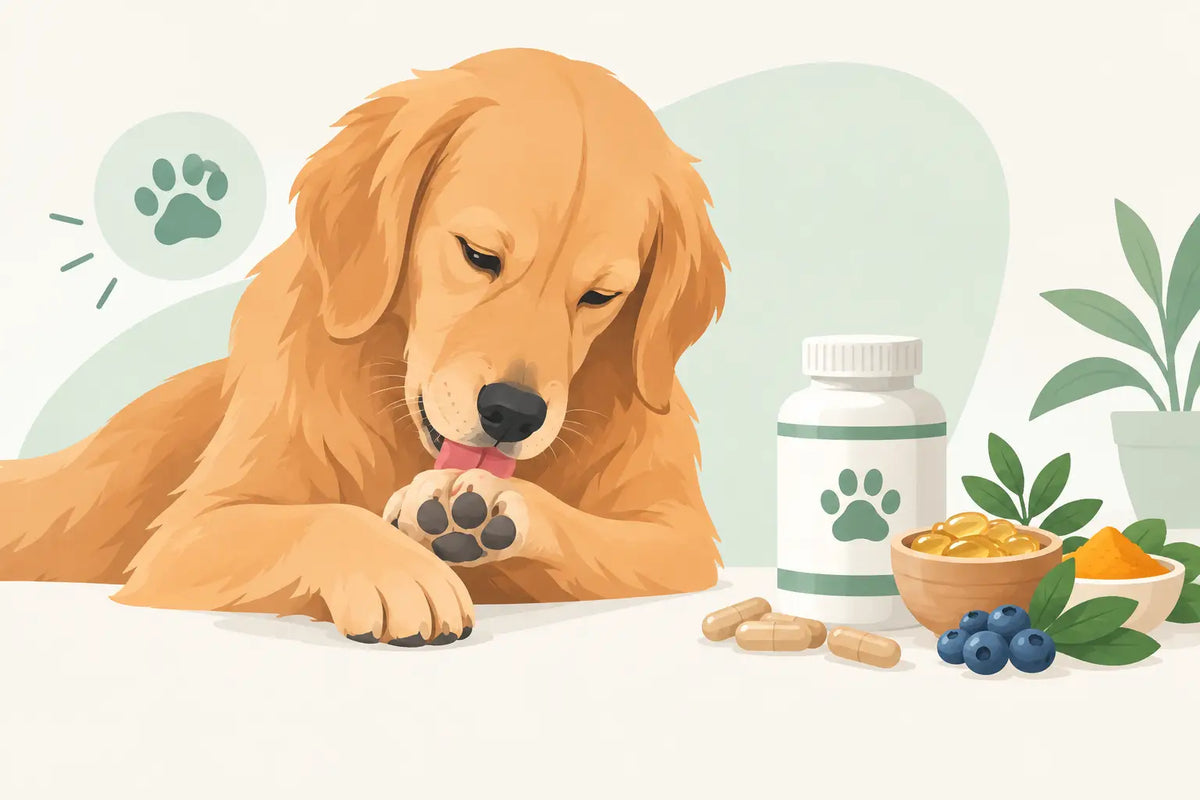
That little lick after a walk can be perfectly normal. The all-evening paw bath, rusty saliva stains, and sudden middle-of-the-night nibbling? That is your dog telling you something feels off. Dog paw licking supplements may support skin and coat health when the issue is tied to everyday itchiness, dry skin, or a less-than-happy skin barrier. But they are not a substitute for finding the reason those paws became so interesting in the first place.
The good news: once you know what to look for, supporting your pup can be refreshingly simple. Think of supplements as one part of a steady routine - alongside clean paws, flea prevention, smart food choices, and veterinary care when symptoms call for it.
Why dogs lick their paws in the first place
Paws pick up a lot. Grass pollen, road salt, lawn treatments, dust, dampness, and tiny irritants all meet the skin between your dog's toes. A dog may lick to clean up after an adventure, but repeated licking can point to environmental allergies, food sensitivities, dry or irritated skin, parasites, an injury, or a skin infection.
Sometimes the trigger is not skin-deep. Dogs can lick when they are bored, stressed, or coping with the storm-shakes. If paw licking ramps up during fireworks, visitors, car rides, or alone time, emotional support and a more predictable routine may deserve as much attention as skin support.
Location offers a useful clue. Licking one paw suddenly is more likely to be a thorn, cracked nail, cut, sting, or sore spot. Licking several paws, especially seasonally, often lines up with allergens or broader skin irritation. Neither pattern is a diagnosis, but both can help you have a clearer conversation with your veterinarian.
When paw licking needs a vet, not a supplement
Supplements are designed for daily wellness support, not emergency care. Call your veterinarian promptly if you see limping, bleeding, swelling, a broken nail, discharge, a bad odor, open sores, or a paw that feels unusually warm. Red, raw skin between the toes and frequent head shaking can also signal an infection or allergy flare that needs treatment.
The same goes for licking that is intense, new, or getting worse. Persistent moisture from licking can create a frustrating cycle: skin gets irritated, your dog licks to soothe it, and the extra moisture further bothers the skin. Getting ahead of that loop is kinder than hoping it clears on its own.
If your dog takes medication, is pregnant, has a chronic condition, or has a history of food reactions, ask your vet before adding a new supplement. Ingredient-conscious care means looking at the whole dog, not just the paw.
What dog paw licking supplements can realistically do
The best dog paw licking supplements do not promise to stop a behavior overnight. Instead, they provide nutrients that help support healthy skin, a glossy coat, and the skin barrier over time. When a dog's licking is connected to dry, itchy-looking skin or seasonal sensitivity, that kind of daily support can be a meaningful piece of the plan.
Expect consistency, not a miracle by breakfast. Skin and coat changes generally build over several weeks because the body needs time to use those nutrients as skin cells turn over and the coat grows. A formula that is easy to give every day matters more than a cabinet full of powders your dog refuses after day three.
Salmon oil and omega fatty acids
Fish oil, particularly salmon oil, supplies omega-3 fatty acids that support normal skin function and a soft, healthy-looking coat. It can be a great fit for dogs with dry skin, dull fur, or seasonal discomfort. Quality matters here: choose a clearly identified source and follow the feeding directions rather than adding generous free pours to dinner.
Omega-rich oils add calories and can cause loose stool in some dogs, especially if introduced too quickly. Start with the labeled serving and give it with food. Dogs with a history of pancreatitis or those on a tightly managed diet need a veterinarian's guidance first.
Collagen and biotin
Collagen provides amino acids that support the structures behind healthy skin and coat, while biotin is a B vitamin often included in coat-focused formulas. These are support players, not itch erasers. They are most useful when they are part of a complete formula and a consistent daily habit.
Look past splashy front-label claims. A trustworthy product makes it easy to identify its active ingredients, daily serving, and what it leaves out. There is no prize for giving your pup unnecessary added sugar, fillers, artificial preservatives, or synthetic stand-ins.
Hemp and calming support
THC-free hemp may be a thoughtful option for dogs whose licking seems to rise with occasional stress. It is not the same as a sedative, and it should not turn your dog into a sleepy stranger. The goal is steady, gentle support so your dog can still enjoy their walk, greet the mail carrier, and deploy the zoomies when the mood strikes.
If stress is a clear part of the picture, calming ingredients such as chamomile, lavender, or valerian root may be relevant too. Still, choose the formula for the need you see. A coat-support supplement is not automatically the right answer for separation-related licking, just as a calming chew cannot remove grass pollen from a paw.
Choosing a formula your dog will actually take
A supplement only works if it becomes part of real life. For many dogs, a soft chew is easier than capsules, powders, or slippery oil pumps. For pet parents, it is easier to remember a beef-liver-flavored chew with breakfast than to negotiate another scoop at the end of a long day.
Choose a product with weight-based directions, transparent ingredient amounts, and a purpose that matches your dog's symptoms. Hemp Hounds Skin & Coat soft chews pair collagen, biotin, Norwegian wild-caught salmon oil, and THC-free hemp in a cold-pressed, no-filler formula for daily skin and coat support. That combination makes sense for the dog whose paws, skin, shedding, and coat all need a little extra love.
Do not stack several skin products at once unless your veterinarian advises it. Multiple chews, oils, and fortified foods can create digestive upset or make it impossible to tell what is helping. One well-chosen formula, served consistently for 10 to 14 days and then continued as directed, gives you a clearer read.
Build a paw-friendly routine around the chew
Supplements work best when they are not doing all the heavy lifting. After walks, gently rinse or wipe paws to remove pollen, salt, and grime, then dry carefully between the toes. Keep fur around the feet trimmed enough to inspect, and check nails regularly. A paw balm can protect against dry pavement and winter salt, but avoid applying anything your dog can easily lick unless it is specifically made for dogs.
At home, wash bedding regularly and consider whether a recent change in detergent, floor cleaner, lawn treatment, food, or treats lines up with the licking. Keep a simple note on your phone: which paws are involved, when licking happens, what your dog ate, and whether there were long walks or high-pollen days. Patterns are helpful information, not pet-parent homework for perfectionists.
If your dog keeps returning to the same paw, take a close look before reaching for another chew. The kindest routine is the one that helps you notice a small problem while it is still small.
A happy pup should have time for sniffing, snoozing, and supervised couch crumbs - not a full-time paw-licking shift. Give daily support a fair chance, stay curious about the cause, and let your veterinarian step in when those paws need more than wellness can provide.