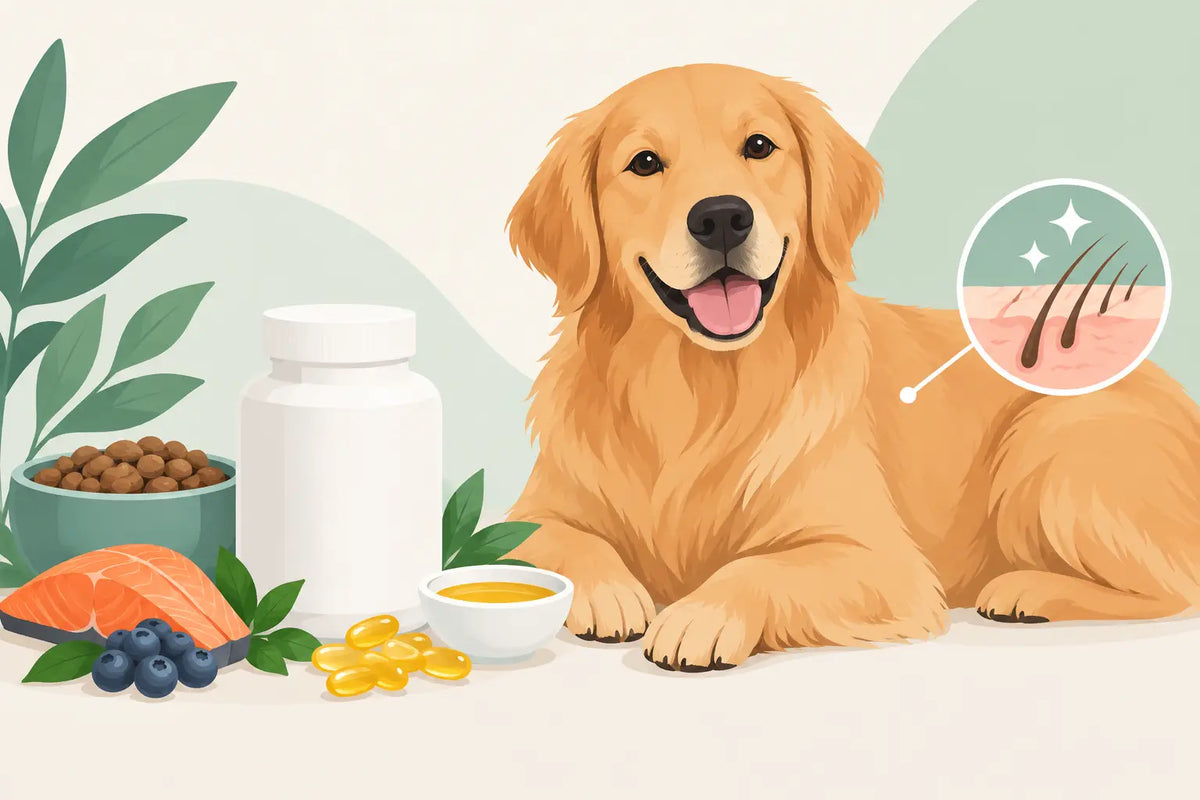
That sudden patch of red, wet, irritated skin can turn a happy couch nap into an all-night lick-fest. Dog hot spot supplements may help support healthier skin over time, but an active hot spot needs more than a chew and crossed paws. The kindest plan is usually two-part: get the sore spot properly assessed and cared for, then build a daily skin-support routine that may help address the itch-scratch cycle behind it.
What a dog hot spot really is
A hot spot, also called acute moist dermatitis, is an area of inflamed skin that can worsen fast. It often starts with a little itch from allergies, flea bites, moisture trapped in the coat, an ear issue, a bug bite, or even boredom-driven licking. Then comes the scratching, chewing, and licking. Before long, a small irritation can become a tender, raw patch that your dog cannot leave alone.
They are especially common beneath thick coats, around the neck and hips, behind the ears, and under collars or harnesses where dampness and friction can linger. You may notice hair loss, redness, swelling, a sticky or oozing surface, odor, or a dog who suddenly guards that area from your touch.
This is why a supplement should never be positioned as a treatment for a hot spot. It cannot disinfect a wound, rule out a skin infection, remove fleas, or stop a determined pup from chewing the same patch all afternoon. A veterinarian can help identify the trigger and recommend the right care, which may include clipping surrounding fur, cleaning the area, treating infection, or protecting the spot while it heals.
Can dog hot spot supplements help?
They can be useful as part of the bigger skin-health picture, particularly for dogs whose hot spots seem to return with seasonal itching, dry skin, a dull coat, or ongoing sensitivity. Think of supplements as daily nutritional backup, not emergency first aid.
Skin is a living barrier. When it is dry, irritated, or repeatedly exposed to allergens and scratching, it can become easier for minor problems to spiral. Nutrients that support the skin barrier, normal inflammatory response, and coat condition may help some dogs feel less itchy over time. Less itch can mean less licking. Less licking can mean fewer opportunities for a tiny irritation to become a full-blown hot spot.
The key phrase is “may help.” Results depend on the cause. A dog with fleas needs effective flea control. A dog with food sensitivities may need a veterinarian-guided diet trial. A dog with recurring ear infections or anal gland discomfort needs that underlying issue addressed. No ingredient, however thoughtfully chosen, can out-chew an untreated root cause.
Ingredients worth looking for in skin support chews
When comparing dog hot spot supplements, skip the dramatic promises and read the active ingredients. A good skin and coat formula should make it easy to understand what is inside and why it is there.
Omega-3 fatty acids from fish oil
EPA and DHA omega-3s are among the most recognized nutritional tools for supporting normal skin function and a healthy inflammatory response. Salmon oil is a popular source, and quality matters. Look for a clearly named fish source, such as Norwegian wild-caught salmon oil, rather than a vague “marine oil” blend.
Fish oil is not a fast fix for an open, angry hot spot. Consistent use is where it earns its place. It may take several weeks to see changes in coat softness, shine, or seasonal itchiness. If your dog is on medication, has a history of pancreatitis, or follows a veterinary therapeutic diet, ask your vet before adding an oil-rich product.
Collagen and biotin
Collagen provides amino acids that support the structures found in skin and coat, while biotin plays a role in normal skin and hair health. These ingredients make particular sense for dogs with dry-looking skin, brittle coats, or shedding that seems more dramatic than the usual tumbleweed season.
Neither ingredient will magically erase a hot spot that is already present. Their value is in steady, everyday support for the skin and coat that surrounds the problem. A healthier-looking coat can also make it easier to spot a new irritation before it becomes a bigger ordeal.
Clean, purposeful formulas
A long ingredient panel is not automatically better. For a dog with sensitive skin, unnecessary fillers, added sugar, preservatives, and synthetic stand-ins can make a daily routine feel needlessly complicated. Choose a product with named functional ingredients, straightforward dosing by body weight, and a format your dog will actually take without a kitchen negotiation.
Soft, cold-pressed chews can be a welcome alternative to powders that go untouched at the bottom of the bowl or pills that get expertly spit onto the rug. Beef-liver flavoring helps, too. Even the pickiest dogs deserve a healthy dose of happy.
Where THC-free hemp fits into a skin routine
THC-free hemp is often included in canine wellness formulas for whole-body support. It is not a substitute for veterinary treatment, and it should not be marketed as a cure for infections, allergies, or hot spots. Still, for pet parents building a thoughtful daily routine, hemp can be one piece of a broader approach focused on comfort and balance.
If you choose a hemp-based product, look for a formula made specifically for dogs, with transparent labeling and no THC. It is also wise to discuss hemp with your veterinarian if your dog takes prescription medications, is pregnant or nursing, or has a complex health history.
Hemp Hounds Skin & Coat soft chews pair raw-state, THC-free hemp with collagen, biotin, and Norwegian wild-caught salmon oil, making them a sensible daily option for dogs who need support for dry skin, shedding, and a less-than-lustrous coat. The goal is not a sedated dog or an overnight transformation. It is steady, non-sedating support that fits into real life, from post-park brush-outs to rainy-day towel-offs.
Build a hot spot prevention routine around the trigger
Supplements work best when they have good company. If your dog is prone to hot spots, inspect the usual trouble areas during grooming and after swimming, baths, muddy hikes, or humid days. Dry the coat thoroughly, especially under collars, harnesses, skin folds, and dense fur. Keep up with veterinarian-recommended flea prevention, because one flea bite can send a sensitive dog into a scratching spiral.
For dogs with recurring issues, keep a simple note on timing and patterns. Do hot spots appear after lake days? During spring pollen? When the heat kicks on and skin gets dry? After a new food or shampoo? Those clues give your veterinarian a much clearer starting point than “he’s been itchy lately.”
Daily supplementation calls for patience, too. Skin cells and coat growth do not change overnight. While every dog is different, give an appropriate daily formula around 10 to 14 days before judging early changes in routine comfort or coat feel, and longer for a fuller view of skin and coat support. Follow the product’s weight-based serving guidance rather than doubling up in hopes of faster results.
When to call the vet instead of waiting it out
A fresh hot spot can expand in a hurry, so call your veterinarian promptly if you see oozing, pus, a strong smell, bleeding, swelling, obvious pain, lethargy, or nonstop licking. The same goes for a spot near the eye, repeated hot spots, or skin that does not improve with veterinary guidance.
Do not apply human creams, essential oils, or leftover medications without your vet’s direction. Some products sting, encourage more licking, or are unsafe if swallowed. And if your dog is wearing an e-collar or recovery suit, think of it as temporary fashion with a very good purpose: protecting the skin long enough to heal.
A hot spot is your dog’s way of saying something feels off. Meet that message with prompt care, gentle prevention, and a daily skin routine built for the long game. Fewer itchy interruptions can leave more room for sunny walks, soft ears, and the kind of zoomies that never retire.