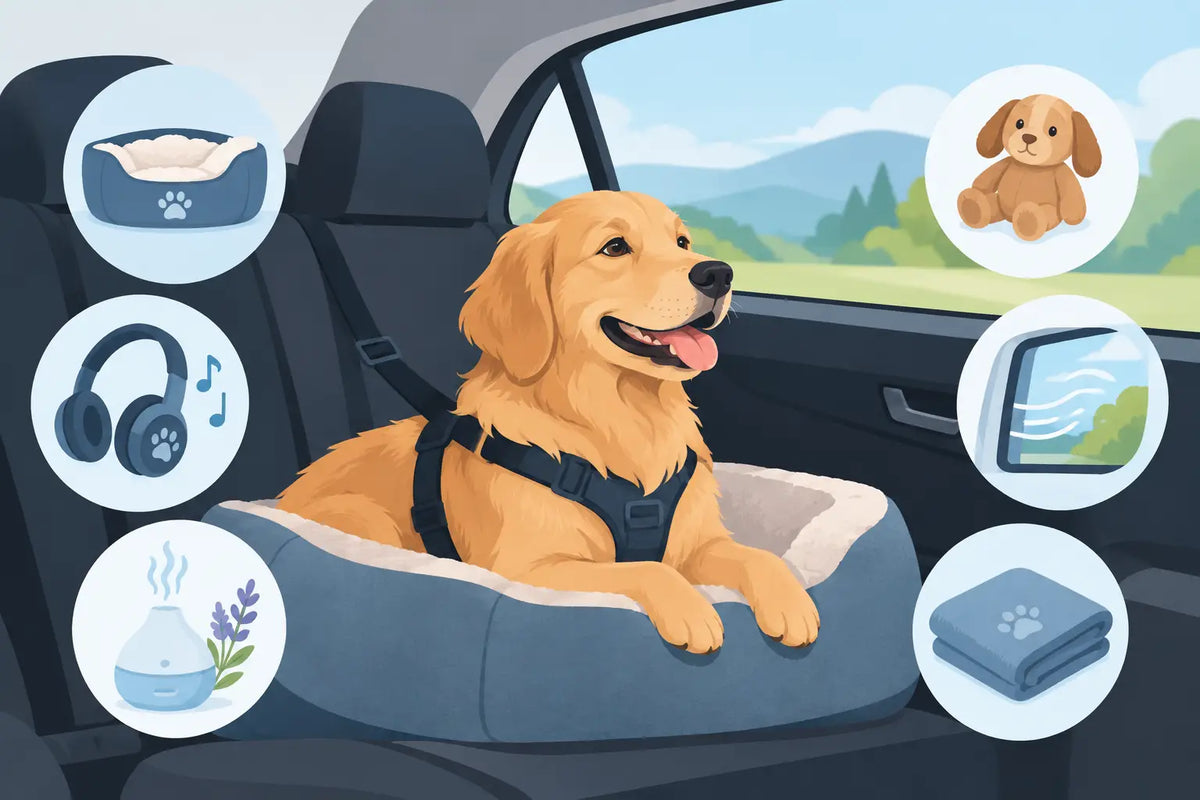
The backseat panting. The drool strings. The look that says, “Please tell me we are not going to the vet again.” Dog car anxiety remedies work best when they address the whole ride, not just the moment your pup spots the keys. A calmer car routine usually comes from a few small changes practiced consistently: better associations, thoughtful travel setup, and support that helps your dog feel more settled over time.
First, tell anxiety from motion sickness
Car anxiety and motion sickness can look remarkably similar. Both can cause panting, whining, restlessness, lip licking, yawning, trembling, drooling, and refusal to hop in. But motion sickness often includes nausea signs such as excessive drool, vomiting, or a dog who feels fine before the car starts moving and miserable once it does.
Puppies are especially prone to motion sickness because their inner ears are still developing. Some dogs outgrow it. Others learn to fear the car because every trip has made their stomach turn. If your dog is vomiting, seems painful, has sudden new symptoms, or cannot settle even on short trips, check in with your veterinarian. Treating nausea may be the key to easing what looks like anxiety.
It also helps to consider the destination. A dog whose only rides end in vaccines, nail trims, or boarding may not be scared of the vehicle itself. They may simply have become very good at predicting what happens next.
Dog car anxiety remedies that build confidence
There is no single fix for every nervous passenger. The goal is to make the car boring, safe, and occasionally wonderful. Start below your dog’s fear threshold - before the storm-shakes begin - and keep sessions short enough that they can succeed.
1. Make the parked car a no-pressure place
For a few days, invite your dog near the parked car with the doors open. Let them sniff around, then reward calm curiosity with praise and a high-value treat. Do not pull, lift, or coax them inside if they are bracing their legs or backing away.
Once they are comfortable nearby, practice sitting beside the car, then stepping in and stepping back out. Keep the engine off at first. A two-minute session that ends with a wag is more useful than a 20-minute standoff.
2. Work up to movement in tiny steps
After your dog can rest comfortably in the parked car, close the door for a few seconds, then open it and head back inside. Next, sit together with the engine on. Later, pull out of the driveway, circle the block, and return home.
This may feel slow, especially when you need to get somewhere. But rushing from “I tolerate the driveway” to a 90-minute highway ride can teach your dog that the car is unpredictable. Repetition is what changes the story.
3. Take rides that end somewhere fun
Not every drive needs to lead to a big adventure. A five-minute ride to a quiet sniff spot, a friend’s house, or a peaceful park bench can be enough. Let your dog get out, explore at their pace, and head home.
For some pups, a busy dog park is too much stimulation after a stressful ride. Choose the reward your individual dog actually enjoys. A mellow walk with their favorite human can beat an overstimulating destination every time.
4. Create a steadier travel space
Dogs often feel more secure when they are not sliding from one side of the seat to the other. Use a properly secured crate, carrier, or crash-tested restraint that fits your dog and your vehicle. Beyond safety, physical stability can reduce the frantic scramble that makes a tense ride worse.
Keep the car comfortably cool, limit loud music, and consider a familiar blanket with the scent of home. Some dogs settle best when they can see out the window; others get more worked up by fast-moving scenery. A covered crate may help the latter, while a window view can help the former. Watch your dog, not the trend.
5. Plan the basics before the wheels roll
Give your dog a chance to potty and take a relaxed walk before leaving. A little sniffing and movement can take the edge off without exhausting them. If motion sickness is a concern, ask your veterinarian about meal timing. Many dogs do better when they are not riding immediately after a large meal.
Pack water for longer trips and schedule breaks based on your dog’s age, comfort, and the weather. Never leave your dog alone in a parked vehicle, even for a quick errand. Temperatures can rise fast, and an already anxious dog does not need another reason to panic.
6. Use calming support as part of a daily routine
A calming chew is not a substitute for training, safe restraint, or veterinary care. It can, however, be a helpful part of a broader routine for dogs who get wound up before a ride. Look for transparent, dog-specific formulas with ingredients chosen for calm, rather than a product designed to knock your pup out.
Hemp Hounds Calm Soft Chews pair THC-free hemp with lavender, valerian root, and chamomile in a melatonin-free, non-sedating daily formula. The point is steady support, not a sleepy passenger. Because gentle wellness support may take time to show its best work, begin daily use well before a planned road trip when possible, and follow the weight-based serving guidance.
As with any supplement, talk with your veterinarian first if your dog takes medication, has a health condition, is pregnant or nursing, or has had a past sensitivity to an ingredient. “Natural” still deserves a careful label read.
7. Keep your own energy low-key
Dogs are astonishingly good at reading our shoulders, voices, and rushed pre-departure energy. If you only reach for treats once your dog is shaking, they may learn that car rides mean something is wrong. Instead, make your routine matter-of-fact: leash on, settle in, calm praise, and off you go.
Avoid scolding whining, pacing, or accidents. Those behaviors are communication, not stubbornness. If your dog is overwhelmed, reduce the difficulty next time. Going back a step is not failure. It is good training.
When car anxiety needs veterinary help
For some dogs, gradual practice and a calmer setup are enough. For others, anxiety is severe enough to affect safety and quality of life. Your veterinarian can rule out pain, nausea, vision changes, or other medical factors and help you decide whether behavior support, medication, or a certified trainer is appropriate.
Get professional guidance sooner if your dog tries to escape a crate or harness, snaps when approached near the car, has repeated vomiting, injures themselves, or panics so intensely they cannot recover after the ride ends. A dog does not have to white-knuckle every trip.
Progress may look wonderfully ordinary: your dog pauses before jumping in, then settles onto their blanket. They take a treat at a stoplight. They nap on the way home from a weekend walk. Keep celebrating those small wins. With patient practice and the right kind of support, the car can become part of the good life again - more trailheads, more family visits, and more happy noses pointed toward the next stop.