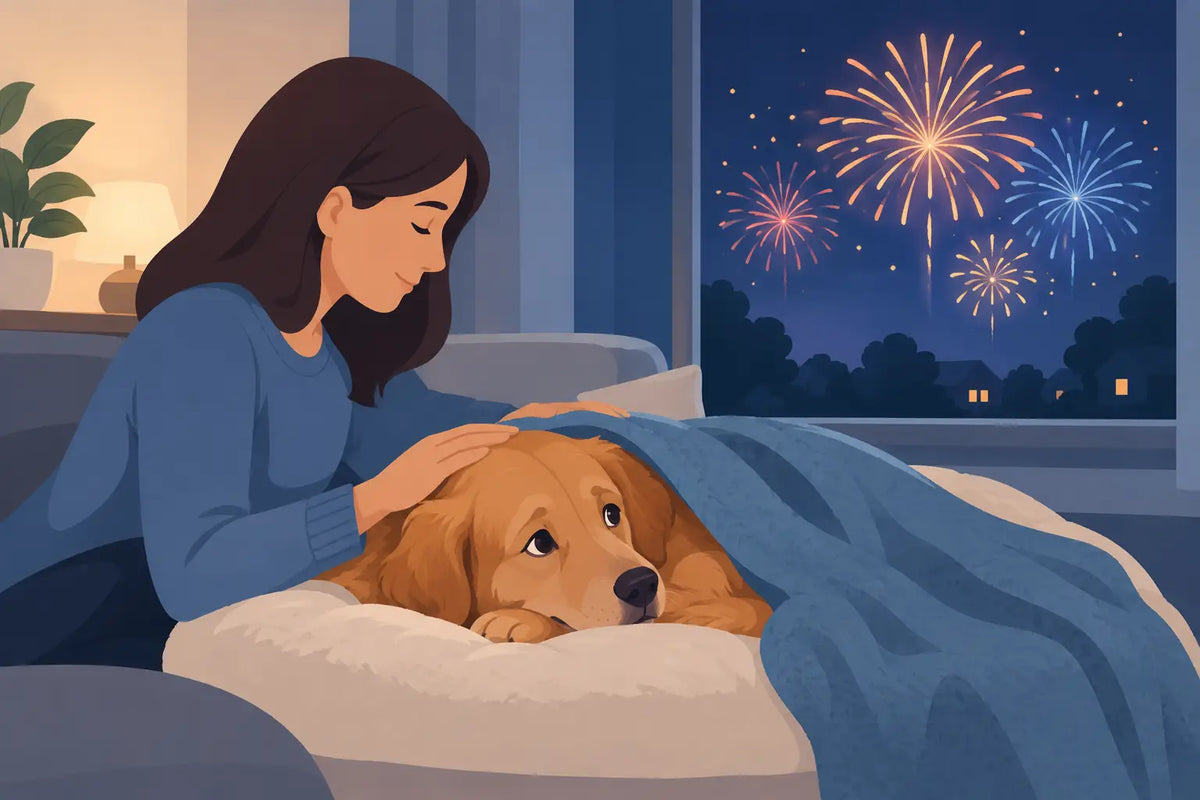
The first boom can turn a perfectly ordinary evening into a full-body panic for some dogs. If you have seen your pup pace, pant, shake, hide in the bathtub, or cling to your side when the neighborhood lights up, you have seen dog anxiety during fireworks firsthand. It is hard to watch, especially when there is no explaining that the noise will pass. The good news is that a thoughtful plan can make those loud nights feel much more manageable for both of you.
Why fireworks feel so big to dogs
Fireworks are not merely loud. They are sudden, unpredictable, and often paired with flashes of light, unfamiliar smells, and the vibration of sound through walls and floors. Dogs hear at frequencies we cannot, so what feels like an annoying pop from across town may feel much closer and more intense to them.
Some dogs are naturally more sound-sensitive. Others develop fear after one especially startling event, and the response can grow stronger over time if every summer holiday becomes another scary experience. Age, hearing changes, past trauma, and a generally nervous temperament can all play a role.
An anxious dog does not need a lecture on bravery. They need safety, predictability, and a calm human nearby. Trying to force them outside to “get used to it” or scolding barking can add pressure to an already overwhelmed nervous system.
Spot the early signs of dog anxiety during fireworks
The storm-shakes are not always obvious at first. A dog may start licking their lips, yawning when they are not tired, following you room to room, refusing treats, or staring toward windows before the pacing and panting begin. Some become extra vocal. Others go quiet and disappear under a bed.
Watch for changes in body language, too: pinned-back ears, a tucked tail, trembling, dilated pupils, drooling, or a stiff posture. A normally house-trained dog may have an accident because fear can override their usual routine. These behaviors are not bad manners. They are communication.
If your dog has ever tried to bolt during fireworks, take that risk seriously. Panicked dogs can slip a collar, dig under a fence, or push through a door with surprising determination. Prevention is kinder than trying to catch them once they are already scared.
Build a fireworks plan before the first boom
The most useful work happens before the evening gets loud. Check local event times, then get your dog’s exercise, potty break, and dinner done early. Choose a calm activity rather than an intense workout right before the noise begins. A relaxed sniff walk, a little gentle play, or a food puzzle can take the edge off without winding them up.
Set up an indoor comfort zone in the quietest room you have. Close windows and curtains to soften flashes and muffle sound. Turn on a fan, white noise machine, television, or calming playlist at a comfortable volume. The goal is not to erase every boom, but to make the outside world feel less sharp.
Your dog’s preferred safe spot matters more than a picture-perfect setup. Some pups settle in a covered crate they already love. Others choose a closet, interior bathroom, or blanket nest beside the couch. Never shut a dog into a crate during fireworks if they are not already comfortable there. A frightened dog can hurt themselves trying to escape a space that feels trapping.
Make sure identification is current before a holiday weekend. Your dog should wear a secure collar with an ID tag, and their microchip information should be up to date. Keep doors and gates closed, and let visitors know your dog should not be let outside. These small steps are not dramatic, but they can prevent a frightening situation from becoming an emergency.
What to do while fireworks are happening
Stay matter-of-fact and available. You do not have to ignore your dog to avoid “rewarding” fear. Fear is an emotion, not a trick. If your dog wants to lean against you, sit with them. Speak softly, offer a familiar chew or a lick mat if they will take it, and keep your movements relaxed.
Some dogs feel better with gentle pressure from a properly fitted calming wrap. Others dislike anything touching their body when stressed. Introduce new tools on ordinary, quiet days so you know what your dog actually enjoys. Fireworks night is not the time for surprise pajamas, a new crate, or a strange scent diffuser.
Avoid taking your dog out to watch the show, even if they seem curious. Keep potty trips short and on leash. If the fireworks are nonstop, it is okay to prioritize safety and let one evening’s routine look a little different.
Practice calm when the sky is quiet
For dogs with recurring noise fear, preparation should not start on July 4 at 8 p.m. Gentle sound desensitization can help when it is introduced gradually. Play a recording of fireworks at a barely noticeable volume while your dog enjoys dinner, playtime, or a favorite treat. Over several sessions, increase the volume only if they remain relaxed.
This is not about pushing through discomfort. If your dog freezes, stops eating, pants, or looks worried, the sound is too loud. Go back a step. Pairing low-level noise with good things can gradually change the emotional association, but progress is usually measured in small, steady wins.
A trainer or veterinary behavior professional can be especially helpful for dogs with severe reactions. The right plan depends on the dog. A pup who mildly startles may benefit from routine and practice, while a dog who injures themselves, escapes, or panics for hours may need more structured support.
Where daily calming support can fit
For some dogs, a consistent wellness routine can be one useful layer of a bigger fireworks plan. The key word is consistent. A daily calming chew is not a last-second mute button for a night of explosions, and any product that promises to instantly erase fear deserves a closer look.
Look for formulas designed to support calm without making your dog feel zonked out. Hemp Hounds Calm Soft Chews pair THC-free hemp with lavender, valerian root, and chamomile in a melatonin-free, non-sedating daily formula. That approach is meant to support a steadier baseline over time, not turn your bright-eyed best friend into a sleepy lump when they would rather keep their zoomies.
As with any supplement, follow the weight-based serving guidance and give your dog time to adjust. Many pet parents build a routine for 10 to 14 days before a known trigger, rather than waiting until the first firework has already landed. Check with your veterinarian first if your dog takes medication, has a medical condition, is pregnant or nursing, or has a history of unusual reactions to supplements.
When fireworks fear calls for veterinary help
Call your veterinarian if your dog’s fear is intense, worsening, or affecting their quality of life beyond the event itself. Signs that warrant a conversation include destructive escape attempts, self-injury, prolonged panic, refusing food or water, repeated accidents, or anxiety that lasts long after the noise stops.
Your vet can rule out medical contributors and discuss options tailored to your dog, which may include behavior support, situational medication, or a combination of approaches. There is no prize for handling severe fear without help. A plan that keeps your dog safe and comfortable is good care.
Give the next morning a soft landing
After a loud night, keep the following day gentle. Offer a quiet walk at a time when the neighborhood is calm, let your dog sleep in, and return to familiar meals and routines. Do not be surprised if they are a little clingy or tired. Their nervous system has had a big workout.
Fireworks may never be your dog’s favorite tradition, and that is okay. With an early plan, a cozy retreat, patient practice, and support that respects their natural personality, you can help turn a night of storm-shakes into a night they can get through with you close by.