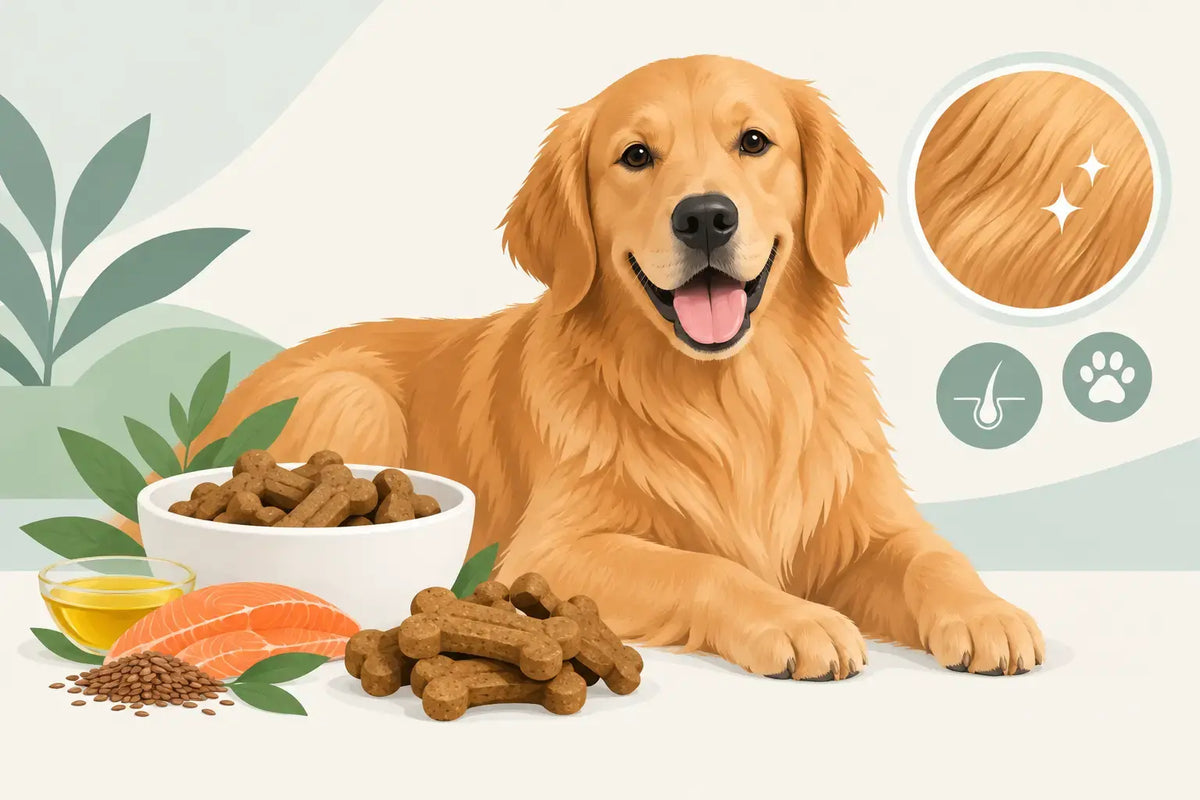
That extra tumbleweed of fur on the rug, the flaky bits along your dog’s back, the coat that suddenly feels more straw than silk - dry skin and a dull coat can turn cuddle time into a worry. The best chews for dry coats do more than make fur look good for a day. They support the skin beneath it with thoughtful ingredients and a routine your dog will actually look forward to.
A soft, shiny coat is often part genetics, part grooming, part nutrition, and part everyday wellness. A chew cannot replace good food, fresh water, flea prevention, or veterinary care. But the right daily formula can be a helpful piece of the puzzle when your pup’s usual velvety softness has gone missing.
A Dry Coat Starts With What Is Happening Underneath
Fur is the showstopper, but skin is the stage. When the skin barrier is not getting the support it needs, you may notice more shedding, dandruff-like flakes, a rough texture, or itching that interrupts naps and belly rubs. Seasonal shifts, dry indoor heat, frequent baths, swimming, environmental irritants, and nutritional gaps can all play a role.
Sometimes the cause is simple: your dog had a few too many baths with a harsh shampoo, or winter air has arrived with zero chill for their skin. Other times, persistent scratching, red skin, a strong odor, bald patches, sores, or sudden coat changes deserve a call to your veterinarian. Chews are daily wellness support, not a substitute for diagnosing allergies, parasites, infections, or other health concerns.
It also helps to separate a dry coat from normal shedding. Many dogs shed plenty while their skin remains comfortable and their coat stays glossy. If the fur is coming out but your dog is not itchy, flaky, or uncomfortable, shedding may just be doing its seasonal thing. If the shedding comes with constant scratching or a lackluster coat, it is worth looking more closely at skin and coat support.
How to Choose the Best Chews for Dry Coats
Skip the flashy front label for a minute and turn the jar around. The best option is not necessarily the chew with the longest ingredient list. Look for purposeful ingredients at amounts that make sense, a clearly stated daily serving, and a formula designed for skin and coat wellness rather than a little bit of everything.
Start with skin-supporting fats
Omega-rich fish oil is one of the most useful ingredients to look for. Salmon oil, especially, brings naturally occurring fatty acids that help nourish skin and support a soft, glossy coat. Norwegian wild-caught salmon oil is a particularly thoughtful choice because it delivers the kind of whole-food ingredient pet parents can recognize without a chemistry lesson.
Fish-based ingredients are not right for every dog. If your pup has a known fish allergy, has reacted to seafood before, or is on a veterinarian-directed diet, check with your vet before adding salmon oil or any new chew. A formula can be wonderful on paper and still be the wrong fit for one particular pup.
Look for building blocks, not beauty buzzwords
Collagen supports the structure of skin, while biotin is a B vitamin commonly included in skin and coat formulas. Together, they are a sensible pairing for dogs whose fur feels dry, brittle, or less plush than usual. These ingredients work best as part of a steady routine, not a one-chew miracle expectation.
That is why ingredient combinations matter. A chew that pairs collagen and biotin with salmon oil supports the coat from more than one angle: skin structure, nutritional support, and healthy oils. Hemp Hounds Skin & Coat soft chews combine those ingredients with THC-free hemp in a beef-liver-flavored, cold-pressed chew made for easy everyday serving.
Read the “no thanks” list, too
A dog does not need added sugar, unnecessary fillers, artificial preservatives, or synthetic stand-ins to enjoy a daily supplement. For dogs with sensitive stomachs or ingredient-conscious households, a clean label can make the routine feel less complicated.
Texture matters here as much as the label. Hard tablets can become a negotiation. Powders can end up on the floor, the bowl, and somehow your socks. Soft chews are easier to serve consistently, especially when they smell and taste like a treat instead of a medicine cabinet. A beef-liver flavor can be the difference between “absolutely not” and a tail-wagging sit by the pantry.
Why Daily Use Beats the Occasional Treat
Skin and fur grow and renew over time, so coat support is a slow-and-steady kind of care. Think weeks, not overnight. With a consistent daily serving, many pet parents begin noticing changes in softness, shine, shedding, or scratching habits over 10 to 14 days, though every dog has their own timeline.
Give the chew at roughly the same time each day. Some dogs love it alongside breakfast, while others see it as the final reward after their evening walk. Follow the weight-based serving directions on the package rather than guessing, particularly with smaller dogs. More is not always better, and a clear dose takes the mental math out of your morning.
If your dog has a sensitive stomach, introduce a new supplement with food and watch how they do. A little patience goes a long way. Keep the rest of their routine stable for the first couple of weeks if you can, so you have a clearer sense of what is helping.
Support the Chew With a Coat-Friendly Routine
A daily chew works best when the basics are pulling their weight too. Fresh water supports healthy skin from the inside, and a nutritionally complete diet gives the body the raw materials it needs. Gentle, regular brushing removes loose fur and distributes natural oils through the coat, which is a small ritual with big cuddle-time benefits.
Baths should be practical, not constant. A dog who rolls in something suspicious may need an emergency spa day, but frequent bathing can strip away oils that keep skin comfortable. Use a dog-specific shampoo, rinse thoroughly, and avoid heavily fragranced products if your pup is prone to sensitivity.
Pay attention to the environment as well. Winter heat and summer air conditioning can dry out indoor air, while grass, pollen, and dusty trails can bother some dogs’ skin. Wipe paws and coat after outdoor adventures when needed, wash bedding regularly, and keep up with veterinarian-recommended parasite prevention. The goal is not a perfect, picture-ready dog at every moment. It is a comfortable dog with more energy for sniffing, snoozing, and the zoomies that never retire.
When a Dry Coat Needs a Vet Check
Call your veterinarian if dryness is severe, sudden, or paired with skin redness, open areas, hair loss, ear issues, appetite changes, weight changes, or nonstop itching. Those signs can point to concerns that need more than wellness support. Bring the supplement label with you if your dog already takes one, especially if they use medications or have a health condition.
For the everyday dry, dull, or flaky coat, choose a clean, targeted chew with meaningful skin-and-coat ingredients, serve it consistently, and give the process time. Your dog may not care about a mirror-worthy mane, but they will surely appreciate feeling comfortable enough to lean into every well-earned scratch behind the ears.